 GlassBottleSupplies












Sales manager will contact you within 24 hours
Why Pro Glass Syrup Bottles Define Brand Quality
The Essential Guide to Premium Syrup Packaging
In the competitive landscape of both hospitality and high-end lifestyle products, the vessel is as important as the liquid it holds. Whether you are a cafe owner looking for a simple syrup bottle that won’t leak, or a brand manager sourcing mini syrup bottles for gift sets, the transition from plastic to professional-grade glass is a non-negotiable step toward quality.
Is Glass Always the Better Choice?
Before asking why glass is the industry standard, we must ask if it is always necessary. In the cosmetic and food-grade sectors, the answer is a resounding yes. Unlike plastic, which can leach phthalates into acidic or sugary liquids over time, glass remains chemically inert. For a syrup pump bottle used daily, glass provides the weight, thermal stability, and clarity that plastic simply cannot replicate.
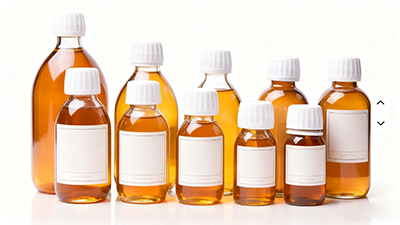
1. The Anatomy of a High-End Syrup Bottle
When we discuss glass syrup bottles, we aren’t just talking about a container; we are talking about a precision-engineered tool.
Material Integrity (Type III Glass)
In the cosmetic glass industry, we categorize glass based on its resistance to chemical attack. Most high-quality syrup bottles utilize Soda-Lime glass (Type III). At Glass Bottle Supplies, we emphasize that the “clarity index” of the glass—the absence of a green or blue tint—is what separates a premium product from a generic one.
The Evolution of the Simple Syrup Bottle
A simple syrup bottle must withstand high sugar concentrations which can “seize” a cheap cap. Professional-grade bottles feature a “fire-polished” finish on the neck. This process smooths out microscopic ridges, ensuring that even if syrup drips, the cap or pump remains easy to remove.
2. Engineering the Perfect Syrup Pump Bottle
A syrup pump bottle is only as good as its displacement mechanism. In the cosmetic industry, pump precision is measured in microliters ($\mu L$).
- Non-Drip Spout: High-viscosity liquids like maple syrup or cosmetic oils require a specific “spring-back” tension.
- Aesthetic Symmetry: For luxury brands, the dip tube must be cut to the exact millimeter to avoid “curling” at the bottom of the bottle, which ruins the visual appeal.
3. Mini Syrup Bottles: The Cosmetic Influence
The trend of mini syrup bottles (50ml to 100ml) often borrows technology from perfume and serum packaging.
- Travel-Size Durability: These bottles must pass “drop tests” that are standard in the cosmetic industry.
- UV Protection: If the syrup contains natural botanicals, using “Amber” or “Flint” glass with UV-coating—a common practice for high-end skincare—is essential to prevent oxidation.
4. Professional Industry Standards (What You Need to Know)
As a manufacturer at glassbottlesupplies.com, we see many buyers overlook the technical specifications that determine long-term ROI.
Thermal Shock Resistance
If you are filling glass syrup bottles with hot-process liquids, the glass must be annealed properly. Standard glass can shatter if the temperature gradient exceeds $40^\circ\text{C}$ ($104^\circ\text{F}$) instantly. Our manufacturing process ensures a high annealing point to prevent stress fractures.
Lead-Free Compliance
In both the cosmetic and food industries, “Heavy Metal Free” is the gold standard. We ensure that our syrup bottles meet FDA and SGS certifications, ensuring no lead or cadmium enters the supply chain.
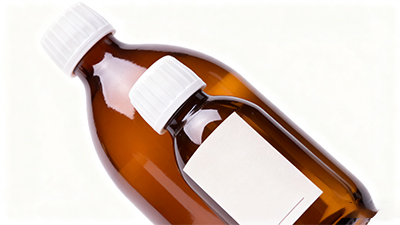
5. Real-World Product Case Study: The “Artisan-9” Series
To provide a concrete example, let’s look at a recent project developed for a luxury coffee-syrup brand that required “cosmetic-level” aesthetics.
The Client Challenge:
The client needed a syrup pump bottle that felt heavy in the hand (high perceived value) but was slim enough for narrow bar rails.
The Solution:
- Product: 500ml Heavy-Base Flint Glass Bottle.
- Weight: Increased the base thickness to 15mm (a technique borrowed from luxury fragrance bottles).
- The Pump: A custom-tooled 10cc pump with a matte black finish, tested for 10,000 compressions without clogging.
- The Result: The client saw a 30% increase in wholesale placement because the “shelf presence” of the glass was vastly superior to the competition’s plastic alternatives.
6. Maintenance and Sustainability
One of the “whys” behind the shift to glass syrup bottles is the circular economy.
- Recyclability: Glass is 100% recyclable without loss in quality.
- Sterilization: Unlike many plastics, glass can be autoclaved or washed at high temperatures ($90^\circ\text{C}+$) to ensure total hygiene between refills.
7. Strategic Keywords for Your Business
When sourcing your next batch of inventory, keep these technical terms in mind to ensure you are getting professional-grade glass:
- Brimful Capacity: The actual volume when filled to the rim.
- Annealing Lehr: The kiln where glass is cooled slowly to remove internal stress.
- Finish Type: (e.g., 28-410 or 31.5mm Alcoa) which determines the pump compatibility.
Conclusion: The Glass Advantage
Choosing the right syrup bottles is a balance of science and style. By applying the rigorous standards of the cosmetic glass industry to food and beverage packaging, you ensure a product that is safe, beautiful, and durable.
Whether you need a simple syrup bottle for a home bar or a fleet of syrup pump bottles for a global franchise, remember: the quality of the glass reflects the quality of the brand.