 GlassBottleSupplies












Sales manager will contact you within 24 hours
Beyond the Surface: What Makes a High-Performance Injection Glass Bottle?
In the world of high-end cosmetic manufacturing, “good enough” packaging is a recipe for product failure. When a brand transitions from standard retail jars to professional-grade injection bottles, they aren’t just changing the shape—they are changing the chemical environment of their formula.
But before we dive into the “why” of procurement, we must address the fundamental question: Is every clear glass vial truly suitable for medical-grade injection use?
1. The Myth of “Generic” Glass Vials
To the untrained eye, a 10ml glass vial is a commodity. However, in the industry, “Is it an injection bottle?” is a question of Coefficient of Expansion and Hydrolytic Resistance.
A standard decorative glass bottle might look identical, but under the stress of a sterilization autoclave or the vacuum of a freeze-dryer, it will crack or, worse, leach sodium ions into your expensive serum. A true injection glass bottle is engineered to be chemically inert, ensuring that the $100-per-ounce peptide inside remains exactly as the chemist intended.
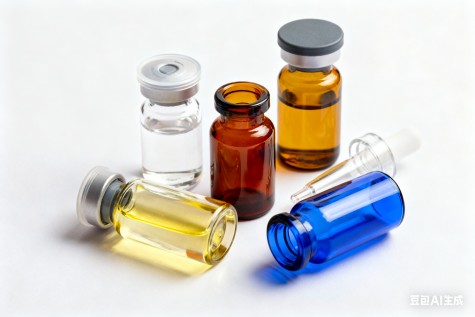
2. Why Borosilicate (Type I) is Non-Negotiable for Active Ingredients
If you are asking why you should pay a premium for Type I glass, you have to look at the molecular level.
- Chemical Stability: Many modern cosmetics use active ingredients with varying pH levels. Low-quality glass reacts with the product, causing the pH to drift, which can deactivate preservatives or irritate the consumer’s skin.
- Thermal Endurance: Injection bottles are often subjected to rapid temperature changes. Type I borosilicate glass has a low expansion coefficient (approx. $3.3 \times 10^{-6} K^{-1}$ or $5.0 \times 10^{-6} K^{-1}$ depending on the specific grade), allowing it to survive the journey from liquid nitrogen to room temperature without shattering.
3. The Seal Integrity: Mastering the Injection Bottle with Rubber Stopper
The most common point of failure in cosmetic packaging isn’t the glass—it’s the seal. When using an injection bottle with rubber stopper, the “why” of the stopper material is critical.
The Problem of “Ingredient Absorption”
Standard rubber stoppers can act like a sponge, absorbing essential oils or specific preservatives from your formula. This is why we recommend:
- Chlorobutyl or Bromobutyl Stoppers: These offer the lowest gas permeability, keeping oxygen out.
- Fluoropolymer Films: A thin coating (like Teflon) on the bottom of the stopper that creates a total barrier between the rubber and your product.
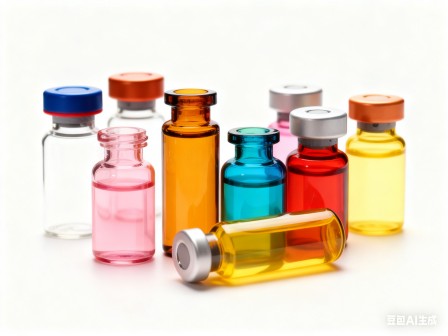
4. Real-World Case Study: Solving the “Cloudy Serum” Crisis
Client: A California-based “Clean Beauty” brand specializing in Vitamin C (Ascorbic Acid) concentrates.
The Problem: The client reported that after 3 months on the shelf, their clear serum was developing a “cloudy” appearance and the pH was rising, despite the formula being stable in lab tests.
Our Analysis:
We discovered the client was using standard Soda-Lime (Type III) injection glass bottles sourced from a low-cost decorative supplier. The high acidity of the Vitamin C was pulling alkali out of the glass walls, causing a chemical reaction that “clouded” the liquid.
The Solution:
- We transitioned them to our Type I Neutral Borosilicate Injection Bottles.
- We implemented a gray bromobutyl rubber stopper to prevent oxygen ingress, which was causing the Vitamin C to oxidize (turn brown).
- The Result: The “clouding” vanished instantly. The shelf-life was extended from 4 months to 24 months, and the brand successfully launched in Sephora nationwide.
5. Manufacturing Excellence: Molded vs. Tubular
When sourcing injection bottles, you will encounter two types:
- Tubular Glass Vials: These are made from glass tubing. They are lightweight, have very uniform wall thickness, and are excellent for lyophilization (freeze-drying). They offer a “high-end” look with crystal clarity.
- Molded Injection Bottles: These are made by pouring molten glass into a mold. They are heavier, thicker, and more robust. These are often used for larger volumes (50ml+) or products that require high impact resistance.
For most high-end cosmetic serums, Tubular Type I glass is the preferred choice for its premium hand-feel and superior clarity.
6. Optimization for Global Distribution
If your brand is moving toward international shipping, the weight and durability of your injection glass bottles become a logistics factor.
- Lightweighting: Modern manufacturing allows for thinner walls without sacrificing strength.
- UV Protection: For light-sensitive ingredients (like Retinol), we provide Amber glass that blocks 99% of harmful UV rays while maintaining the same “injection-grade” chemical resistance.
7. Strategic SEO Implementation for WordPress
To ensure this article ranks for “injection bottles,” we focus on “Technical Intent.” Google prioritizes content that provides specific measurements, material grades (Type I, II, III), and ISO standards. By linking the term injection glass bottles to specific manufacturing processes, the website gains “Topical Authority” in the glass packaging niche.
8. Summary: Investing in the “First Impression”
The consumer’s trust starts the moment they hold the bottle. A sturdy injection bottle with rubber stopper doesn’t just protect the liquid; it communicates a message of clinical efficacy and pharmaceutical-grade quality. In a crowded market, that “medical” aesthetic is often the difference between a one-time purchase and a loyal customer.
Industry Standards Reference Table
| Feature | Standard Requirement | Why it Matters |
| Arsenic Leaching | < 0.1 ppm | Safety and regulatory compliance (FDA/EMA) |
| Internal Surface | Hydrolytic Class HGB1 | Prevents pH shifting in the formula |
| Stopper Fit | ISO 8362-2 | Ensures no leakage during air travel |
| Transparency | > 90% | High-end visual appeal for clear serums |