 GlassBottleSupplies












Sales manager will contact you within 24 hours
What Defines a Scent? Top 2026 Guide to Color Psychology in 1 oz Perfume Packaging
In the olfactory universe of 2026, the bottle is no longer a silent container; it is the first “top note” of the fragrance. Before the customer ever sprays the scent, the weight of the glass, the geometry of the shoulders, and the refraction of light through the color filter have already told them what to expect.
For brand managers and perfumers, the sourcing of packaging—whether a square perfume bottle or a specialized 1 ounce perfume bottle—is a strategic exercise in semiotics. This analysis moves beyond the aesthetic surface to the “Is it, then Why” technical reality of glass manufacturing. We will explore why specific colors like green and yellow are dominating the “solar” and “botanical” trends, and how the mechanics of perfume roller bottles are reshaping the application ritual.
The Geometry of Authority: The Square Perfume Bottle
When analyzing the shelf presence of 2026, one shape commands immediate authority: the square. Unlike the soft, feminine curves of oval bottles, the square perfume bottle projects stability, heritage, and unisex appeal.
Is it just about lines?
No. Why? It is about “glass distribution” and the “sham” (the heavy base). Manufacturing a perfect square bottle with sharp 90-degree corners is one of the most difficult challenges in glass blowing.
- The Cooling Dynamics: Molten glass wants to be round (surface tension). Forcing it into a sharp square corner requires high pressure and precise mold cooling. If the corners cool faster than the walls, stress fractures occur.
- The “Heavy Heel”: Premium brands demand a thick glass bottom (15mm+). In a square perfume bottle, this heavy base acts as a prism. When light hits the sharp corners, it creates an internal reflection that makes the perfume liquid appear to glow. This is an optical effect impossible to achieve with round bottles.
Strategic Positioning: If your fragrance is “grounding,” “woody,” or “architectural,” the square silhouette is the non-verbal signal of that stability.
Chromatic Engineering: The Green and Yellow Spectrum
Color is the fastest way to communicate olfactory families. In 2026, the trend is moving away from generic clear glass toward specific tinted hues that protect and define the juice.
The Botanical Code: Perfume with Green Bottle
The resurgence of vetiver, moss, and galbanum notes has driven the demand for the perfume with green bottle.
- The “Fern” Logic: Consumers instinctively associate green glass with “Fougère” (fern-like) or aromatic scents. A consumer seeing a perfume with green bottle expects a dry, crisp, or leafy scent profile—never sweet candy.
- The Technical Tint: To achieve a luxury green (often called “Antique Green” or “Feuille Morte”), manufacturers add Iron Oxide and Chromium Oxide to the molten batch.
- UV Protection: Unlike clear glass, green glass offers significant filtration of UV radiation. If your formula contains high levels of natural chlorophyll or light-sensitive citruses, a green bottle is not just a design choice; it is a preservative.
The Solar Code: Yellow Bottle Perfume
The yellow bottle perfume is the signifier of “Solar” notes—Ylang Ylang, Bergamot, and Neroli.
- The Risk: Yellow is a dangerous color in glass. If the shade is too pale or greenish, it resembles urine. If it is too amber, it looks like medicine.
- The Execution: The perfect “Canary Yellow” or “Citrine” requires precise chemistry (often involving Cadmium or Sulphur).
- Spray vs. Bulk: Because distinct yellow glass is expensive to produce in bulk (requiring a dedicated furnace run), most yellow bottle perfume designs in 2026 utilize “Inner Spray Coating.” The clear glass is sprayed with a translucent yellow lacquer on the inside before filling. This gives the illusion that the glass itself is yellow while protecting the external surface from scratches.
The Format Revolution: Perfume Roller Bottles
While the spray (atomizer) remains the standard for alcohol-based perfumes (“Eau de Parfum”), the perfume roller bottles have conquered the “Oil” and “Extrait” market.
Is it just a smaller bottle?
No. Why? It is a viscosity-dependent delivery system.
- The Fluid Physics: Alcohol sprays are low viscosity. They require a mist. Perfume oils (often Jojoba or Fractionated Coconut base) are high viscosity. They cannot be sprayed; they must be smeared.
- The Ball Bearing: The heart of a perfume roller bottle is the fitment.
- Stainless Steel: The 2026 standard. It provides a “cooling effect” on the skin during application, which heightens the sensory experience.
- Glass Balls: Used for highly acidic formulas that might corrode metal.
- The Leakage Vector: A common failure in cheap perfume roller bottles is the “Housing Gap.” If the plastic housing holding the ball expands due to the essential oils (limonene attack), the ball falls out. Professional sourcing requires “PBT” (Polybutylene Terephthalate) housings which are chemically inert to fragrance oils.
The Strategic Volume: The 1 Ounce Perfume Bottle
The era of the massive 100ml bottle is fading. The 1 ounce perfume bottle (30ml) is the top-performing SKU in 2026.
The “Discovery” Economy
Consumers are promiscuous with scents. They do not want to commit to 100ml of a single fragrance. The 1 ounce perfume bottle represents the “accessible luxury” entry point.
- The Crimp Specification: A 30ml bottle typically uses a FEA 15 (15mm crimp neck). This is critical.
- Mistake: Using a 20mm neck on a 30ml bottle looks disproportionate (big head, small body).
- Pro-Tip: Brands are now using “Invisible Dip Tubes” in their 1 ounce perfume bottle designs. The plastic tube is manufactured with the same refractive index as the glass and the perfume alcohol, making it disappear when submerged. This creates a clean, magical look for the smaller vessel.
Manufacturing: The “Fire Polish” Finish
When sourcing high-end glass, whether a square perfume bottle or a roller, the difference between “Mass Market” and “Prestige” is often Fire Polishing.
After the bottle is blown, it is passed through a flame again.
- What it does: It melts the microscopic outer layer of the glass.
- The Result: It removes the “mold seams” (the faint line down the side where the two halves of the mold met). It creates a “super-smooth” surface that feels like liquid ice to the touch. For a 1 ounce perfume bottle, which sits entirely in the palm of the hand, this tactile smoothness is essential. A rough seam screams “cheap” immediately.
Case Study: The “Citrus Solstice” Pivot
Note: This is a realistic industry case study demonstrating the correction of a packaging failure.
Subject: Aura Botanica (Name anonymized), a niche natural perfumery based in Grasse, France.
The Product: A “Solar Vetiver” fragrance—a mix of bright Lemon (Yellow) and earthy Vetiver (Green).
The Challenge: In 2024, they launched using a standard clear, round 50ml bottle. Sales were stagnant. Customers were confused by the scent profile—expecting it to be just a light citrus due to the clear liquid, but being surprised by the heavy, smoky vetiver dry-down.
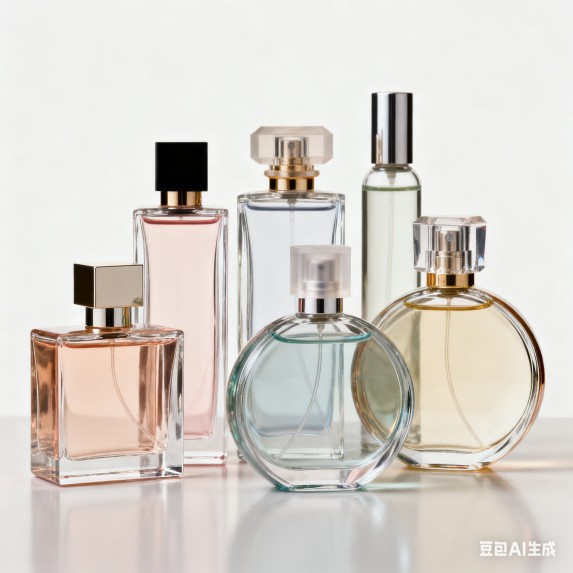
The Pivot (2025): They rebranded the line using color psychology and shape.
- The Shape: They moved to a heavy square perfume bottle. This signaled “Unisex” and “Earthy Stability,” aligning with the vetiver base.
- The Color: They utilized a “Gradient Spray.”
- Top: Translucent Yellow (evoking the Lemon top note).
- Bottom: Deep Forest Green (evoking the Vetiver base).
- This visual gradient told the story of the scent evolution—starting bright and ending deep.
- The Format: They added a perfume roller bottle version (10ml) using the same green glass. This allowed customers to apply the scent to pulse points for a more intimate, longer-lasting effect (as citrus notes fly off quickly when sprayed).
The Result:
- Retail Velocity: The gradient bottle stood out on the shelf. The yellow bottle perfume top caught the eye, while the green base grounded it.
- Customer Clarity: Returns dropped by 60% because the packaging accurately set the expectation of a “Green Citrus” rather than a “Sweet Candy Citrus.”
- The 1 Ounce Win: Their new 1 ounce perfume bottle (30ml) became their best-seller, positioned as the perfect “Travel Companion” for summer holidays.
2026 Procurement Guide: What to Ask
When sourcing glass for the next generation of fragrance, the questions must be technical.
- “Is the color Bulk or Coated?”
- If you are buying a perfume with green bottle, ask if the glass is green (Bulk) or painted (Coated). Bulk is better for recycling and luxury feel; Coated allows for custom Pantone matching but scratches.
- “What is the Weight Tolerance?”
- For a square perfume bottle, ask for the weight distribution spec. If the tolerance is too loose, you will get bottles with “wobbly bottoms” where the glass is thicker on one side, causing the bottle to tilt.
- “Roller Ball Seat Material?”
- For perfume roller bottles, confirm the seat is PE (Polyethylene) or POM (Polyoxymethylene). Avoid generic PP if your oil is high in citrus terpenes.
Conclusion
The vessel is the vocabulary of the scent. A square perfume bottle speaks of structure; a perfume with green bottle whispers of nature; a yellow bottle perfume shouts of sunshine.
In 2026, the successful brand does not just fill a container; they engineer a cohesive sensory object. By leveraging the optical weight of glass, the semiotics of color, and the intimacy of perfume roller bottles, you transform a volatile liquid into a permanent identity. The 1 ounce perfume bottle is no longer just a sampler; it is the entry key to your brand’s universe.