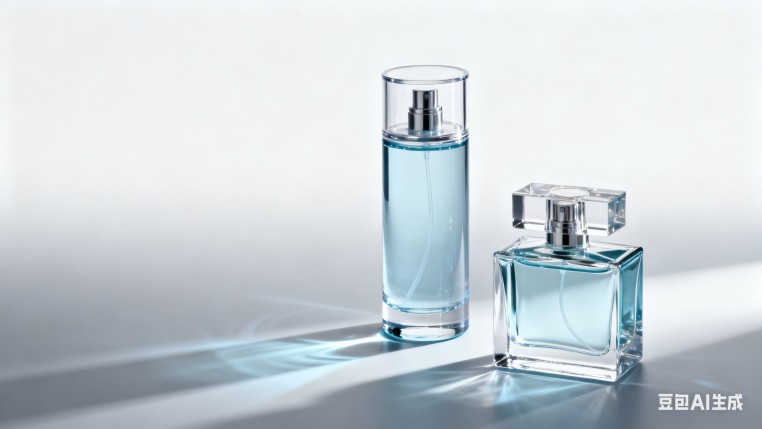
In the world of high-end fragrance, the glass bottle is not merely a container; it is a precision-engineered instrument. For brands sourcing perfume bottle with pump systems or exploring unique perfume bottle sizes, the difference between a successful product launch and a logistical nightmare lies in the technical specifications of the glass itself.
Beyond Aesthetics: Is “Old” Glass Technically Superior?
When clients search for a perfume bottle old style, they are often chasing a specific “hand-feel” known as heft. But before asking why heavy glass feels more luxurious, we must first ask is a heavier bottle actually more durable?
In the glass manufacturing sector, weight is a result of “distribution.” A “vintage-style” bottle usually features a thick “gob” of glass at the base.
The Technical Reality: While thick-base bottles (Heavy Flint Glass) look stunning, they require a significantly longer Lehr Annealing process.
The Risk: If the cooling process is rushed, internal tension stays trapped in the thick base. At our facility, we use automated stress-scanners to ensure that even the most “antique-looking” heavy bottles meet modern safety standards.
The Science of Light: Why Your Next Fragrance Might Need a Green Bottle
The trend of perfume in a green bottle is sweeping the niche market, from “forest-inspired” scents to “apothecary” aesthetics. However, the choice of color is as much about chemistry as it is about branding.
Is green glass better for the fragrance?
Yes. In the electromagnetic spectrum, ultraviolet (UV) light is the primary enemy of essential oils.
UV Absorption: Green glass (produced by adding iron, chromium, or copper oxides to the molten silica) naturally filters out high-frequency light.
Chemical Stability: Unlike “coated” or “painted” bottles, solid-colored green glass is chemically inert. There is zero risk of the fragrance solvent (ethanol) reacting with or peeling the interior color, because the color is part of the glass molecular structure.
Mastering Perfume Bottle Sizes: A Logistics Perspective
Choosing between various perfume bottle sizes is a strategic decision that affects your shipping costs, shelf presence, and “Cost Per Milliliter” (CPM).
High-Precision Specifications Table
Capacity
Height Tolerance
Body Diameter
Ideal Glass Weight
30ml
± 1.0mm
30-35mm
80g – 110g
50ml
± 1.2mm
40-45mm
130g – 160g
100ml
± 1.5mm
50-55mm
220g – 280g
The “Standardization” Trap:
Many wholesalers assume that a 100ml bottle from one supplier will fit the box designed for another. This is a mistake. Due to the expansion of glass in the mold, the external dimensions can vary by up to 2mm. Always request a “Molding Specification Sheet” before finalizing secondary packaging like folding cartons or EVA foam inserts.
The Pump Mechanism: The 0.1mm Margin of Error
A perfume bottle with pump is a mechanical assembly. The most common point of failure in the cosmetic industry isn’t the glass—it’s the Neck Finish.
Crimp vs. Screw: Which should you choose?
FEA 15 (Crimp): This is the industry standard for 50ml and 100ml bottles. It requires a pneumatic crimping tool. It offers the best “invisible” look and the highest leak protection.
18/415 (Screw): Ideal for the “Clean Beauty” movement. It allows the consumer to unscrew the pump and recycle the glass or refill the bottle.
Professional Note: When testing a pump, perform a “Prime Test.” A high-quality pump should require no more than 3 to 5 strokes to begin misting. If it takes 10+ strokes, the air-to-liquid ratio in the pump chamber is poorly calibrated for the viscosity of your fragrance.
Case Study: Engineering a Custom 100ml Emerald Flagon
Client: A North American organic skincare brand expanding into “Green Perfumery.”
Requirement: They requested a perfume in a green bottle that looked like an old pharmaceutical vessel but utilized a modern fine-mist pump.
The Manufacturing Process:
Material: We used high-clarity soda-lime glass with a 12% cullet (recycled glass) ratio to maintain sustainability goals.
Custom Mold: A “Shoulder-Heavy” design was created. This is difficult to manufacture because glass naturally wants to flow to the bottom. We used a “Blow-and-Blow” process to ensure the shoulders remained thick and shatter-resistant.
The Pump: We fitted the bottle with a customized 15mm gold-anodized aluminum pump with a “low-output” actuator (0.07ml per spray) to ensure the concentrated fragrance wasn’t wasted.
The Result: The brand achieved a 40% higher price point than their competitors, proving that the technical “vessel” creates the perceived value of the “juice” inside.
Quality Control Checklist for B2B Buyers
If you are importing glass containers, ensure your supplier provides:
Hydrolytic Resistance Test: Ensures the glass won’t leach minerals into the perfume.
Vacuum Leakage Test: Vital for perfume bottle with pump setups; the bottle is placed in a vacuum chamber to check for seal integrity.
Vertical Load Test: Ensures the bottle can withstand the pressure of the capping/crimping machine (usually must withstand >150kg of vertical force).
Conclusion
Navigating the complexities of perfume bottle sizes, shapes, and colors requires a partner who understands the molecular science of glass as well as the aesthetic demands of the market. At Glass Bottle Supplies, we don’t just sell containers; we provide the engineering excellence that protects your brand’s liquid gold.
 GlassBottleSupplies