 GlassBottleSupplies












Sales manager will contact you within 24 hours
Beyond the Vessel: Engineering the Perfect Leak-Proof Glass Dropper System
In the global supply chain for premium cosmetics and pharmaceuticals, a “simple” leak is never simple. It represents a failure in engineering, a loss of expensive formulation, and potential damage to a brand’s reputation. When sourcing a glass dropper bottle, many procurement managers ask “why” their current samples are failing. Before we ask why, we must ask: Is the neck-to-closure tolerance actually matched?
1. The Science of the “Neck Finish”: GPI and DIN Standards
The most common cause of failure in a bottle dropper assembly is a mismatch between the glass neck and the cap’s internal threads. In the professional glass industry, we adhere to two primary standards:
- GPI/GCMI Standards: Common in the US market (e.g., 20-400 or 18-410). The first number is the diameter in millimeters; the second refers to the thread style.
- DIN 18 Standards: The European standard, predominantly used for the nasal dropper bottle and essential oil industry, featuring a deeper thread and a specific “tamper-evident” rim.
At our manufacturing facilities, we utilize digital calipers and “Go/No-Go” gauges to ensure that every glass bottle with dropper assembly achieves a hermetic seal. If your supplier isn’t discussing thread pitch and “T” dimensions, they aren’t selling you a professional system—they are selling you a jar.
2. Total Barrier Protection: Why Amber Glass is Non-Negotiable
We are often asked why medical and high-end skincare brands stay loyal to the classic amber hue. To understand this, we must look at the Transmission Curve of the glass.
Light-sensitive ingredients—such as Vitamin C (Ascorbic Acid) or silver-based nasal solutions—undergo photodegradation when exposed to UV light. Glass bottles with dropper assemblies in “Flint” (clear) glass offer zero protection. Amber glass, however, incorporates iron oxide and sulfur into the melt, which absorbs light in the 200nm to 450nm range. This acts as a chemical-free preservative, extending the shelf life of the product by up to 200%.
3. The Anatomy of a High-Performance Dropper
A professional bottle dropper is an assembly of four engineering choices:
- The Cap: Usually Polypropylene (PP) or Urea (Bakelite). Urea is heavier and more “premium” but more brittle; PP is flexible and provides a better “bite” on the glass threads.
- The Bulb: For the nasal dropper bottle, we prioritize medical-grade Monoprene or Silicone, which can withstand autoclave sterilization temperatures.
- The Pipette: Heat-expanded glass tubing. The tip must be fire-polished to ensure there are no micro-shards that could be aspirated or applied to the skin.
- The Seal: We often incorporate a “land seal” or a specialized liner inside the cap to prevent the liquid from ever touching the bulb material during transit.
[Industrial Application Case Study]
Project: Specialized Pediatric Nasal Delivery System
Client: A pharmaceutical laboratory specializing in saline-based decongestants for infants.
The Challenge: The client was experiencing “evaporation loss” in their nasal dropper bottle inventory. Because the product was a micro-dose, even a 5% loss in liquid volume changed the concentration of the medicine, making it unsafe for pediatric use.
The Diagnostic (“Is it the glass or the cap?”):
Upon inspection, we found the glass neck was “out of round” (slightly oval instead of circular). This created a microscopic gap where the cap could not apply even pressure.
The Solution from glassbottlesupplies.com:
- Precision Injection Blow Molding: We shifted production to a high-precision mold that guaranteed a circularity tolerance of $\pm 0.05\text{mm}$.
- Graduated Pipettes: We provided 0.1ml incremental silk-screened glass pipettes, allowing parents to administer the exact dosage required.
- Venting Orifice: We engineered a small air-return groove in the dropper insert to ensure the bulb didn’t “stuck-collapse” during repeated use in a high-viscosity environment.
The Outcome: The lab passed its stability audit with a 0.01% evaporation rate over 24 months, and the product was successfully launched in 1,200 pharmacies nationwide.
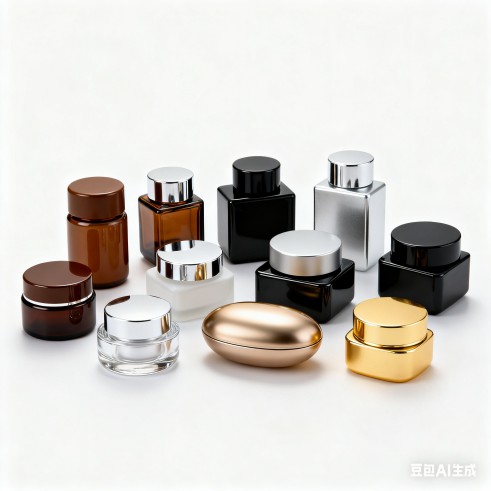
4. Cosmetic Aesthetics: Customization Without Compromise
While function is paramount, the glass dropper bottle is the “face” of a beauty brand. Modern glass manufacturing allows for sophisticated finishes that do not interfere with the bottle’s structural integrity:
- Internal Lacquering: Adding color to the inside of the glass for a 3D depth effect.
- Frosted Acid Etching: Creates a soft-touch texture that hides fingerprints—critical for oil-based serums.
- Metallization: Applying a thin layer of ions to create a mirror-gold or silver finish.
5. Navigating the Global Supply Chain: Quality Control
When you buy a glass bottle with dropper, you are importing a multi-material product. We recommend that all B2B buyers demand the following documentation:
- Heavy Metal Analysis: Ensuring the glass meets the “TPCH” (Toxics in Packaging Clearinghouse) requirements.
- Thermal Shock Resistance: The glass must withstand a temperature differential of at least $40^\circ\text{C}$ without cracking.
- Vacuum Leak Test: Bottles should be placed in a vacuum chamber at -0.5 bar for 10 minutes to ensure the dropper seal holds during air freight.
6. Conclusion: The Glass Advantage
In a world trying to move away from single-use plastics, the glass dropper bottle stands as the gold standard. It is inert, beautiful, and functional. Whether you are looking for a specialized nasal dropper bottle for a clinical trial or a luxury bottle dropper for a new serum, the key is in the details of the glass chemistry and the precision of the fit.