 GlassBottleSupplies












Sales manager will contact you within 24 hours
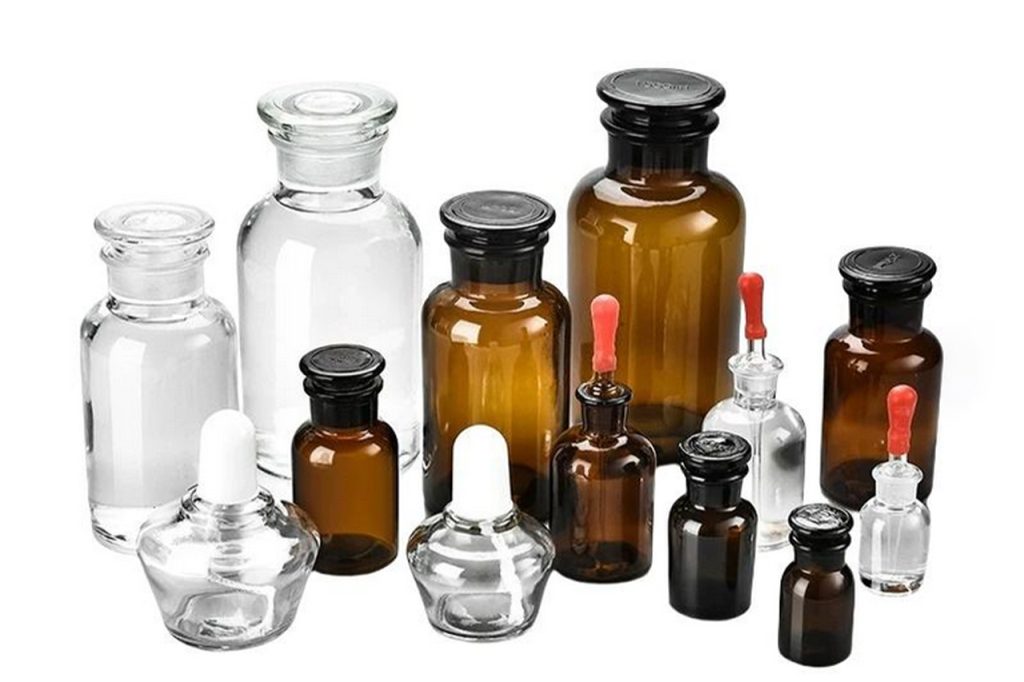
Amber Chemical Reagent Bottles: The Science of Light Protection
In the world of packaging, transparency is usually a virtue. However, when dealing with light-sensitive compounds—whether they are analytical standards in a laboratory or high-potency active ingredients in the cosmetic industry—transparency is a liability.
For procurement managers and lab directors, choosing the right chemical reagent bottles is not merely a question of aesthetics; it is a question of chemical survival. A chemistry reagent bottle fails if it allows the contents to degrade before they are even used.
This comprehensive guide explores the physics of amber glass, the “Is it vs. Why” of UV protection, and how the modern reagent bottle with screw cap creates a fortress against environmental degradation.
The “Is It?” Question: What is True Amber Glass?
Before understanding why you need it, you must confirm what you are buying. In the glass manufacturing industry, there are two ways to make a bottle brown. Understanding the difference is critical for reagent bottle chemistry.
1. Sprayed Amber (The Imitation)
Some manufacturers produce clear glass bottles and spray them with a brown semi-transparent coating.
- Is it effective? Minimally. It offers some visual darkening but often fails to block specific UV wavelengths.
- The Risk: The coating can scratch off during shipping or dissolve when exposed to solvents like Acetone or Alcohol, leaving the reagent exposed.
2. True Amber Glass (The Standard)
True amber chemical reagent bottles are produced by adding iron, sulfur, and carbon to the molten glass mixture in the furnace. The color is intrinsic to the material structure.
- Is it permanent? Yes. It cannot be scratched off or chemically removed.
- The Standard: High-quality borosilicate amber glass meets USP Type I standards for light transmission, ensuring that light accumulation does not exceed strict pharmacopeial limits.
The “Why?” Question: The Photochemistry of Reagent Storage
Why do we strictly require amber glass for certain applications? The answer lies in the reagent bottle chemistry interaction between photons and molecules.
The UV Threat (200nm – 450nm)
Many chemical reagents and cosmetic actives (like Retinol, Vitamin C, and Silver Nitrate) are “labile.” When high-energy UV light hits these molecules, it donates energy that breaks chemical bonds.
- Photo-oxidation: Oxygen radicals are formed, causing the liquid to turn rancid or change color (e.g., Vitamin C turning yellow/brown).
- Photolysis: The molecule simply falls apart.
The Amber Shield Mechanism
A professional amber chemistry reagent bottle acts as a high-pass optical filter.
- Blocking Power: It virtually eliminates light transmission in the ultraviolet range (below 380nm) and significantly reduces blue light (up to 500nm).
- The Result: The contents remain in the dark, thermally and chemically stable, even if the bottle sits on a laboratory shelf exposed to fluorescent lighting.
The Role of the Reagent Bottle with Screw Cap
While the glass protects against light, the cap protects against air and moisture. The two must work in unison.
The Airtight Necessity
In reagent bottle chemistry, oxidation is often the secondary enemy. A ground-glass stopper (the old standard) can “freeze” (get stuck) or pop out if the temperature rises. The modern reagent bottle with screw cap uses a GL45 or GL80 thread.
- Why Screw Caps? They provide a verifiable torque. When tightened to the correct Newton-meter specification, the cap compresses the liner uniformly.
- The Liner Chemistry: As mentioned in previous guides, a PTFE-faced liner is non-negotiable here. If you store a volatile solvent (like ether or essential oils) in a bottle with a standard paper or plain foam liner, the vapors will disintegrate the liner, contaminating the reagent.
Color-Coded Safety
The cap color on a reagent bottle with screw cap often signifies its thermal rating:
- Blue (PP): Standard use, autoclavable to $140^\circ C$.
- Red (PBT): High heat, suitable for dry heat sterilization.
- Green/Yellow: Often used in industry to denote specific hazards or “In-Process” materials.
Buying Guide: Manufacturing Defects to Avoid
When sourcing chemical reagent bottles, especially for high-end cosmetic production or analytical labs, inspect the samples for these common manufacturing faults:
1. The “Thin Heel”
In the blow-molding process, if the glass distribution is poor, the bottom corners (the heel) will be paper-thin. In an amber bottle, this is hard to see because the glass is dark.
- Test: Hold the bottle up to a very bright LED light. If the corners glow significantly brighter than the walls, the glass is too thin and will likely burst under pressure or thermal shock.
2. Thread Distortion
A chemistry reagent bottle is useless if the cap doesn’t seal.
- The Defect: Sometimes the glass thread is oval rather than round due to improper cooling.
- The Consequence: The screw cap will feel tight, but gaps remain, allowing volatile reagents to evaporate.
Case Study: The “Brown Serum” Disaster
The Client: A boutique skincare brand launching a high-concentration L-Ascorbic Acid (Vitamin C) serum. This ingredient is notorious for oxidizing rapidly when exposed to air or light.
The Problem: The client sourced generic “brown bottles” from a low-cost general trader. Within 3 weeks of the product hitting the shelves, customers complained that the serum—originally clear—had turned a murky orange-brown. The product was oxidizing inside the bottle.
- Investigation: We analyzed the client’s bottles. They were sprayed amber, not true amber. The coating was too thin and allowed 40% of UV light to penetrate. Furthermore, the caps were simple plastic with no PTFE liner, allowing oxygen ingress.
The Solution:
We deployed our industrial-grade chemical reagent bottles (30ml and 50ml versions) for their consumer packaging.
- Material: We used True Amber Borosilicate Glass. Transmission tests showed $<1\%$ UV penetration.
- Closure: We adapted the reagent bottle with screw cap design (GL standard) but fitted it with a cosmetic-grade dropper assembly that maintained the hermetic seal of a laboratory bottle.
The Result:
Accelerated stability testing showed the serum remained clear for 24 months, compared to 3 weeks in the previous packaging. The brand saved their reputation and marketed the “Lab-Grade Glass” as a key selling point of their premium pricing strategy.
Advanced Application: Reagent Bottles in the Cosmetic Industry
It is a common misconception that chemical reagent bottles are only for universities or refineries. In the cosmetic manufacturing sector (GlassBottleSupplies.com’s specialty), these bottles are the backbone of R&D and bulk storage.
Raw Material Storage
Perfumers and formulators use GL45 reagent bottles to store:
- Essential Oils: To prevent “off-notes” caused by UV degradation.
- Peptides: Which are often hygroscopic (absorb water from air) and require the supreme seal of a GL thread.
The “Sample” Economy
When sending pre-production samples to clients, using a generic jar looks unprofessional. Sending samples in a miniature chemistry reagent bottle signals to the client that the formulation inside is chemically stable, valuable, and handled with scientific rigor.
Summary Checklist for Buyers
If you are sourcing glassware, ensure your supplier can answer “Yes” to these technical queries:
- Is the amber color intrinsic (melted in)? (Avoid sprayed glass).
- Does the bottle meet ISO 4796-1 standards? (Ensures thread compatibility).
- Are the graduations resistant to acid/alkali? (Ceramic enamel vs. cheap ink).
- Is the screw cap liner chemically bonded? (Prevents delamination).
Conclusion
The difference between a spoiled experiment (or a recalled cosmetic line) and a successful one often comes down to the vessel. Chemical reagent bottles are not passive containers; they are active shields.
By understanding the reagent bottle chemistry regarding light and choosing a reagent bottle with screw cap that offers a true hermetic seal, you protect the value of your liquid assets. Whether you are a lab manager or a cosmetic brand owner, insist on True Amber Borosilicate glass.