 GlassBottleSupplies












Sales manager will contact you within 24 hours
Why Precision Ball-Fit Tolerances Determine the Efficacy of Roller Bottles for Essential Oils
In the pharmaceutical and aromatherapeutic sectors, the roller bottles for essential oils serve as a sophisticated precision-delivery system rather than a simple storage vessel. The functionality of a roll-on applicator is a study in fluid dynamics, where the “controlled leakage” of the liquid depends entirely on the clearance between the ball, the housing, and the internal pressure of the glass container. For professional formulators, selecting empty roll on bottles is a decision that balances chemical compatibility with the kinetic requirements of topical application.
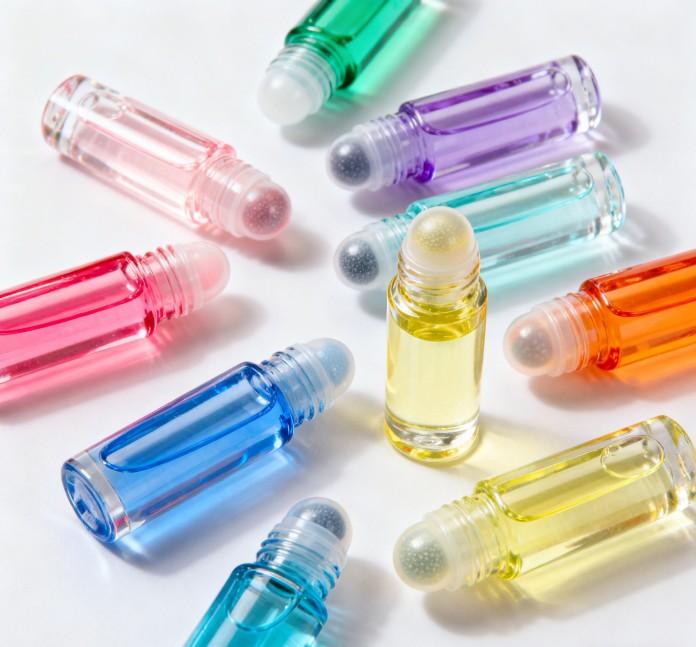
1. The Physics of the Roll-On Mechanism: Capillary Action and Gravity
To understand why roller essential oil bottles are engineered the way they are, one must first analyze the “Fitment.” The fitment is the plastic or metal housing that holds the sphere in place.
- The S-Dimension: This is the gap between the ball and the housing. If the gap is too narrow, the ball seizes; if too wide, the bottle leaks. For a standard 10ml or 1 oz roll on bottles, this tolerance is usually kept within 0.05mm.
- Surface Tension: Essential oils have lower surface tension than water. This means they “creep” through smaller gaps. A bottle that holds water perfectly may leak when filled with a citrus-based essential oil due to the oil’s ability to bypass standard seals.
2. Material Science: Glass Type and UV Attenuation
Before asking why amber glass is used, we must establish if it is always necessary. For “neat” (undiluted) essential oils, the answer is an categorical yes.
- Type III Soda-Lime Glass: Most empty roll on bottles are manufactured from Type III glass, which provides a high degree of chemical resistance. However, the glass must be “De-alkalized” if the formulation has a sensitive pH.
- Amber vs. Cobalt Blue: While Cobalt Blue is popular, Amber glass provides superior protection in the 200nm to 450nm range. Many essential oils, such as Bergamot or Lemon, are phototoxic or degrade into skin irritants when exposed to UV light. The 1 oz roll on bottles in Amber are the industry benchmark for bulk topical blends.
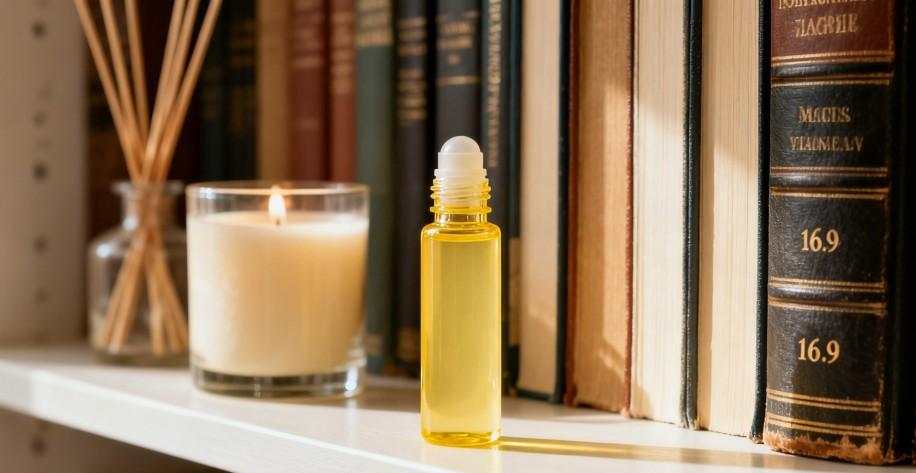
3. The Sphere Material: Stainless Steel vs. Glass vs. Plastic
The “ball” in roller bottles for essential oils is the primary point of failure or success.
- 316 Stainless Steel: The gold standard. It is corrosion-resistant, provides a “cooling” sensation on the skin, and has the weight necessary to break the surface tension of thicker carrier oils like Jojoba or Fractionated Coconut Oil.
- Glass Spheres: Chemically inert but prone to “chatter” (uneven rolling) if the fitment isn’t perfectly calibrated.
- Polypropylene (PP): Lightweight and cost-effective, but can be degraded by high concentrations of “hot” oils like Oregano or Cinnamon, leading to a “sticky” ball that refuses to rotate.
4. The 1 oz Capacity: Industrial Scaling and Consumer Use
While 10ml is the common “pocket” size, 1 oz roll on bottles (approx. 30ml) are increasingly used in professional clinical settings and for body-oil applications.
- Weight Distribution: A 1 oz bottle has a wider base and a lower center of gravity, making it more stable on high-speed filling lines.
- Volume-to-Surface Ratio: Larger volumes of oil are slightly more stable against oxidation because the ratio of “headspace” (the air at the top) to the total liquid is lower once the bottle has been partially used.
5. Manufacturing Constraints: The Neck Finish and Leakage
The neck of a roller essential oil bottle is not threaded like a standard bottle. It is designed for a “snap-fit” fitment.
- Internal Diameter (I.D.) Consistency: The most critical QC metric for empty roll on bottles is the I.D. of the neck. If the glass wall is even 0.2mm too thick, the plastic fitment will be “pinched,” causing the ball to lock. If too thin, the fitment will spin, making it impossible for the user to apply the product.
Real-World Product Case Study: Clinical Grade Pain-Relief Blend
The Product: A high-concentration Menthol and Wintergreen topical analgesic. The Challenge: The manufacturer was using 10ml plastic roll-on containers. The Menthol crystals were reacting with the plastic walls, causing “clouding” and a noticeable loss in the “cooling” efficacy of the product. The Technical Shift: The brand transitioned to 1 oz roll on bottles made of heavy-wall Amber glass with a 316 Stainless Steel roller ball. The Result: * Chemical Stability: Chromatography tests showed 100% purity of the Menthol after 12 months of storage.
- Leakage Reduction: The transition to a glass-to-steel interface eliminated the “seepage” issues caused by the plastic-on-plastic friction of the previous packaging.
- User Experience: The 30ml size allowed for a larger ball diameter, which provided better coverage for large muscle groups (back/thighs) compared to the small 10ml applicators.
6. The Role of Carrier Oils in Roller Ball Lubrication
A common industry misconception is that the roller ball “seals” the bottle. It does not. The seal is created by the outer cap, which has a “depressor” inside that pushes the ball down against the housing to create a mechanical seal.
- Viscosity Matching: If using a 1 oz roll on bottle for a thin liquid (like an alcohol-based perfume), the ball-fit must be tighter. If using a thick carrier oil (like Castor oil), a looser fitment is required to allow the oil to coat the ball surface.
- Priming the Ball: New roller bottles for essential oils often require “priming.” This is because the surface of the ball is bone-dry. Once the first layer of oil coats the sphere, it acts as a lubricant for all future rotations.
7. Quality Control: The “Torque and Vacuum” Test
When sourcing empty roll on bottles in bulk, professional buyers perform two critical tests:
- Vacuum Leak Test: The filled bottle is placed in a vacuum chamber. If air bubbles escape from the roller housing, the fitment tolerances are out of spec.
- Removal Torque: Measuring the force required to pull the fitment out of the glass neck. If it pulls out too easily, it poses a choking hazard or a massive spill risk.
8. Environmental Impact and Reusability
Unlike many cosmetic dispensers, glass roller essential oil bottles are highly reusable.
- Sterilization: Glass can be autoclaved or boiled to remove old oil residues. However, the plastic fitment and the ball housing should be replaced, as the plastic absorbs oils over time.
- Recyclability: The glass is 100% recyclable. Most modern glass bottle suppliers now use a percentage of “cullet” (recycled glass) in their melt to reduce the carbon footprint of the 1 oz bottle production.
9. Identifying “Grey Market” Glass Defects
Not all roller essential oil bottles are created equal. Professional-grade glass must be free of:
- Shear Marks: Fine lines at the base of the bottle that look like cracks but are actually cooling marks. If too deep, they weaken the bottle’s pressure resistance.
- Air Seeds: Micro-bubbles that can expand and shatter the glass if the bottle is left in a hot car—a common occurrence for consumer essential oil products.
10. Conclusion: The Precision of the Roll
The transition from simple dropper bottles to roller bottles for essential oils represents a move toward “dosage-controlled” application. By selecting the correct volume—such as 1 oz roll on bottles—and ensuring the ball material and fitment tolerances match the viscosity of the oil, manufacturers can guarantee a leak-proof, professional-grade product that maintains its therapeutic integrity from the first roll to the last.