 GlassBottleSupplies












Sales manager will contact you within 24 hours
Glass Injection Bottles: The Technical Buyer’s Guide to Safety and Specs
In the world of parenteral drug delivery and high-end cosmetic serums, the container is not just a package; it is an integral part of the product’s stability. For procurement officers and brand managers, navigating the terminology between a standard injection bottle and various molding technologies can be confusing.
This guide moves beyond the basics to provide a deep dive into glass injection bottle manufacturing, the critical differences between glass forming and injection blow molding bottles, and the quality standards that prevent costly recalls.
1. Defining the Glass Injection Bottle
Before discussing manufacturing, we must define the scope. A glass injection bottle (often referred to as a vial) is a small vessel, typically ranging from 2ml to 100ml, designed to hold liquid, powder, or lyophilized (freeze-dried) substances.
Unlike standard beverage packaging, these bottles must meet rigorous chemical resistance standards (USP Type I, II, or III). They are sealed with a rubber stopper and an aluminum or flip-off cap to allow for needle piercing—hence the term “injection.”
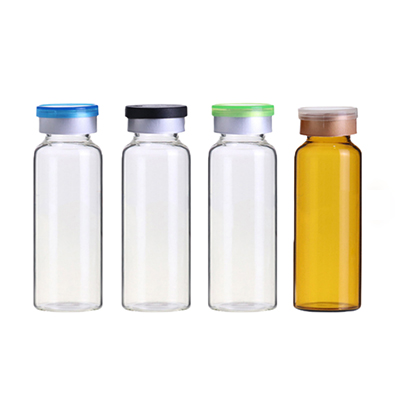
The Two Main Types of Glass Injection Bottles
- Tubular Glass Vials: These are created by cutting and forming long glass tubes. They offer superior wall thickness uniformity and cosmetic clarity. They are the gold standard for high-value serums and vaccines.
- Molded Injection Bottles: These are formed directly from molten glass in a mold. They are more robust and resistant to mechanical shock but may have slightly higher cosmetic imperfections compared to tubular glass.
2. Manufacturing Physics: Glass Forming vs. Injection Blow Molding
A common point of confusion in the industry arises from the keyword injection blow molding bottles. It is crucial for buyers to understand the distinction to ensure they order the correct material.
Glass Forming (The IS Machine Process)
For a glass injection bottle, the process generally involves “Blow-and-Blow” or “Press-and-Blow” methods.
- Gob Loading: A precise drop of molten glass (gob) is cut and falls into a blank mold.
- Parison Formation: Compressed air (or a plunger) forces the glass into the shape of a parison (a pre-form).
- Final Blow: The parison is transferred to the final mold, where air is blown to push the glass against the mold walls, creating the final shape.
Injection Blow Molding (IBM)
Strictly speaking, injection blow molding bottles usually refer to plastic (PET, PP, or HDPE) manufacturing. In IBM:
- Polymer is injected into a core pin to create a preform.
- The core pin rotates to a blow mold.
- Air inflates the plastic.
Why does this matter? If you are packaging light-sensitive enzymes or aggressive solvents, plastic injection blow molding bottles may react with your formula. In these cases, a Type I Borosilicate glass injection bottle is the mandatory choice due to its hydrolytic resistance.
3. Technical Specifications: Type I, II, and III Glass
When sourcing a glass injection bottle, you are buying chemical stability.
- Type I (Borosilicate Glass): Contains boron oxide. It has the highest resistance to thermal shock and chemical leaching. It is the standard for most bottle injection applications involving pH-sensitive liquids.
- Type II (Treated Soda-Lime): Soda-lime glass that has undergone sulfur treatment (de-alkalization) on the inner surface. Suitable for buffered acidic/neutral aqueous solutions.
- Type III (Soda-Lime): Standard glass. Used for dry powders or injectable liquids that do not react with glass.
Industry Insight: For high-end cosmetic brands launching “freeze-dried powder” sets, Type I tubular glass is recommended. It prevents the “flaking” effect (delamination) that can occur when aggressive active ingredients sit in lower-quality glass for months.
4. Critical Quality Control Parameters
Manufacturing the bottle is only half the battle. To ensure the bottle injection process (filling) goes smoothly on your production line, the glass must meet strict dimensional tolerances.
A. Neck Dimensions and Sealing
The neck finish (e.g., 13mm, 20mm crimp) must be precise. If the glass rim is uneven, the rubber stopper will not seal hermetically during the bottle injection filling phase, leading to leakage or contamination.
B. Hydrolytic Resistance Test
We submerge the glass grains in water at 121°C and measure the alkali released. A high-quality glass injection bottle will release minimal alkali, ensuring it doesn’t alter the pH of the medicine or serum inside.
C. Thermal Shock Resistance
Since many injection bottles undergo freeze-drying (lyophilization) or high-heat sterilization (autoclaving), they must withstand rapid temperature changes without cracking.
5. Case Study: Solving the “Invisible Particulate” Crisis
Client: Nebula Bioceuticals (Name changed for privacy), a manufacturer of high-concentration Vitamin C serums.
The Problem: Nebula was using standard clear molded bottles from a generic supplier. Six months into their shelf life, customers reported “floating specs” in the serum. This was glass delamination—the inner surface of the glass was flaking off due to the acidity of the Vitamin C attacking the silica network of the cheap glass.
The Analysis: We identified that their previous supplier provided non-treated soda-lime glass, which is unsuitable for pH levels below 4.5. Furthermore, the client was interested in injection blow molding bottles made of PET to save money, but PET offers poor oxygen barrier properties, which would oxidize the Vitamin C.
The Solution: We transitioned them to Type I Middle Borosilicate Tubular Glass Injection Bottles.
- Material: The boron content strengthened the silica network, making it impervious to the acid attack.
- Process: We used tubular forming technology, which provides a smoother inner surface than molded glass, further reducing surface area for chemical interaction.
- Aesthetics: The tubular glass offered high transparency, allowing the golden color of the serum to shine, boosting shelf appeal.
The Result:
- Zero Delamination: Accelerated stability testing showed no particulates after 12 months.
- Production Efficiency: The precise neck finish of the tubular vials improved their capping speed by 15%, as fewer bottles jammed the bottle injection (filling/capping) machine.
6. How to Choose: A Quick Checklist
When requesting a quote for a glass injection bottle, provide the following to get an accurate assessment:
- Content pH: Is your liquid acidic, neutral, or alkaline?
- Process: Will you use Lyophilization (Freeze-drying)? (Requires flat bottom tubular vials).
- Sterilization: Autoclave (steam) or Dry Heat?
- Geometry: Do you need standard ISO dimensions, or a custom mold?
- Volume: Nominal capacity vs. Brimful capacity.
Conclusion
While the terminology can be fluid—ranging from injection blow molding bottles for plastics to precision tubular forming for glass—the physics of containment remains absolute. A glass injection bottle is the fortress protecting your product’s efficacy.
Whether you are packaging a life-saving antibiotic or a luxury anti-aging serum, choosing the correct glass type prevents chemical interaction and ensures line efficiency. At our facility, we bridge the gap between rigorous medical standards and aesthetic cosmetic requirements.