 GlassBottleSupplies












Sales manager will contact you within 24 hours
From Lab to Luxury: Why Top Skincare Brands Are Switching to Glass Injection Bottles
In the competitive landscape of “cosmeceuticals,” packaging is no longer just about aesthetics; it is about efficacy preservation. There is a noticeable shift occurring in the high-end beauty market. Brands are moving away from standard plastic containers and adopting the glass injection bottle—formerly the exclusive domain of hospitals and vaccines—as the new standard for premium serums and freeze-dried powders.
This article explores why the injection bottle is conquering the beauty shelf, the technical superiority of glass over injection blow molding bottles, and how to navigate the bottle injection filling process for cosmetic applications.
1. The “Medicalization” of Beauty Packaging
Modern consumers are educated. They understand ingredients like Vitamin C, Retinol, and Peptides. They also know that these ingredients are unstable. When a consumer sees a product packaged in a hermetically sealed glass injection bottle, it psychologically signals: Clinical Strength, Sterile, and Potent.
Unlike a standard screw-cap jar where oxygen enters every time it is opened, an injection bottle sealed with a rubber stopper and a flip-off cap ensures the formula remains in a vacuum-like environment until the moment of use.
2. Material Science: Glass vs. Plastic (The IBM Debate)
When designing a new product line, Product Developers often debate between using a glass vial or looking into injection blow molding bottles (typically PET or PP plastic).
While injection blow molding bottles are cheaper to ship due to their light weight, they possess fatal flaws for high-performance skincare:
A. The Oxygen Barrier Problem
Plastic is permeable on a molecular level. Over time, oxygen can migrate through the walls of injection blow molding bottles, causing oxidation. If your serum turns brown (common with Vitamin C), it is likely due to the packaging.
- The Glass Advantage: A glass injection bottle (specifically Type I Borosilicate) is impermeable. It provides a total barrier against gas exchange, ensuring the active ingredients remain potent for 24+ months.
B. Leaching and Chemical Compatibility
Cosmetic formulations are becoming more aggressive (lower pH, higher concentrations). Plastic additives can leach into the formula.
- The Glass Advantage: Borosilicate glass is chemically inert. It does not interact with the product, ensuring that the “purity” claimed on the label is maintained inside the bottle.
3. The Critical Role of Lyophilization (Freeze-Drying)
One of the main drivers for the surge in glass injection bottle orders is the popularity of Freeze-Dried Powders (Lyophilized Powders).
This process involves freezing the liquid formula and removing the ice by sublimation. This requires the bottle to withstand extreme temperature shifts (from -50°C to +30°C).
- Why Plastic Fails: Most injection blow molding bottles deform or crack under the vacuum and temperature stress of a lyophilizer.
- Why Glass Succeeds: Tubular glass injection bottles are designed specifically for this thermal shock. Their flat bottoms ensure efficient heat transfer on the lyophilizer shelves, ensuring a uniform cake structure for the powder.
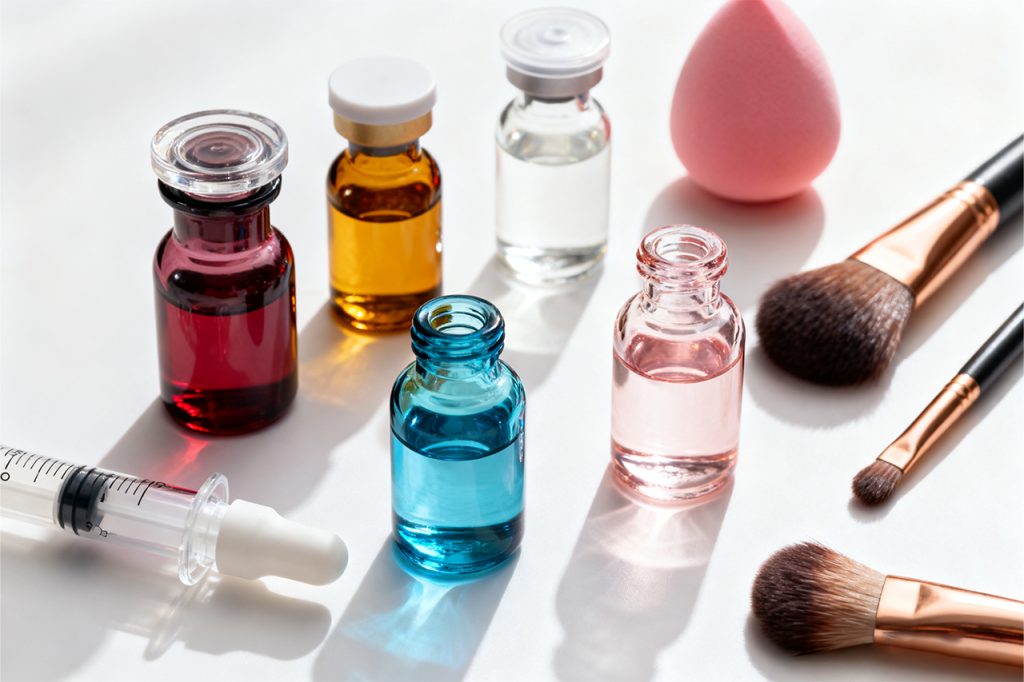
4. Navigating the “Bottle Injection” Filling Line
For cosmetic brands sourcing these bottles, understanding the bottle injection (filling and sealing) process is vital for quality control.
Unlike standard cosmetic filling, the bottle injection line requires:
- Washing & Depyrogenation: The bottles are washed and heated to remove pyrogens (bacterial byproducts).
- Nitrogen Flushing: Before the stopper is inserted, nitrogen is often blown into the bottle to displace oxygen.
- Crimping: An aluminum or aluminum-plastic cap is crimped over the stopper.
Pro Tip for Brands: When ordering injection bottles, ensure you specify the “neck finish” clearly (e.g., 20mm ISO standard). If your crimping machine is set to European standards and you buy Asian specification bottles without checking the tolerance, you will experience high breakage rates on the line.
5. Aesthetics: Making “Medical” Look “Magical”
A raw glass injection bottle looks clinical. To fit a luxury brand, we must customize it without compromising the glass integrity.
- Frosting/Acid Etching: Creates a matte finish that feels premium to the touch and diffuses light to protect photosensitive ingredients.
- Ceramic Screen Printing: Unlike ink printing on plastic injection blow molding bottles which can rub off, we fire ceramic paint onto the glass at 600°C. It becomes part of the bottle.
- Metallic Spraying: We can coat the bottle in gold or silver gradients to match brand identity, while leaving a “window” to see the liquid level.
6. Real Industry Case Study: “PureDerma” Transformation
Client: PureDerma Labs (A mid-sized European skincare brand focusing on anti-aging).
The Challenge: PureDerma was launching a “7-Day Rescue Ampoule” set containing high-strength Retinol. They initially launched using small PET injection blow molding bottles to save on shipping weight.
- The Failure: Within 3 months, customers complained that the product smelled “off.” Tests revealed that the Retinol had oxidized due to the poor barrier properties of the PET plastic. Furthermore, the plastic bottles felt “cheap” in the hand, contradicting the €80 price point.
The Solution: We consulted with their team and migrated them to 7ml Amber Tubular Glass Injection Bottles.
- Protection: The amber glass naturally blocks UV light (essential for Retinol).
- Material: We used Type I Borosilicate glass to ensure zero interaction with the formula.
- Design: We applied a gold hot-stamp logo directly onto the glass and paired it with a custom gold flip-off cap.
The Outcome:
- Stability: Shelf life increased from 6 months to 24 months.
- Perceived Value: Customer reviews praised the “professional” and “hygienic” packaging.
- Sales: The product became their bestseller, with a 40% re-order rate. The switch to a glass injection bottle justified the premium price point in the eyes of the consumer.
7. Procurement Checklist for Cosmetic Brands
If you are ready to upgrade your packaging, use this checklist when contacting us:
- [ ] Capacity: Do you need “fill volume” (e.g., 5ml of liquid) or “overflow volume”?
- [ ] Glass Type: Clear (for colored liquids) or Amber (for light-sensitive actives)?
- [ ] Finish: Crimp neck (requires a crimping tool) or Screw neck (easier for consumers, but less airtight)?
- [ ] Accessories: Do you need the rubber stoppers and flip-off caps supplied as a kit?
Summary
The glass injection bottle is bridging the gap between pharmaceutical safety and cosmetic luxury. While injection blow molding bottles have their place in low-cost hair care or body lotions, they cannot compete when it comes to high-value facial serums and freeze-dried powders.
By choosing a high-quality glass injection bottle, you are not just buying a container; you are investing in the stability of your formula and the reputation of your brand.