 GlassBottleSupplies












Sales manager will contact you within 24 hours
Elevating Your Brand with Premium Glass Nail Polish Bottles
The architecture of a beauty brand is built on more than just the formula inside the container. In the competitive landscape of the cosmetic industry, the tactile and visual quality of your nail polish bottles serves as the primary touchpoint for consumer trust. Whether you are a boutique artisan looking for empty nail polish bottles or a global brand seeking the durability of the gel bottle nail polish standards, understanding the technical nuances of glass manufacturing is paramount.
1. The Material Science: Why Glass Still Reigns Supreme
In the world of professional cosmetic packaging, glass is not merely a vessel; it is a preservative shield. Most high-end nail polish bottles are manufactured from Type III soda-lime glass. This specific material is chosen for its chemical stability and its ability to withstand the volatile solvents found in nail lacquers, such as ethyl acetate and butyl acetate.
Chemical Composition and Durability
Unlike plastic, which can leach chemicals or warp when exposed to the aggressive solvents in polish, glass remains inert. The standard composition usually involves:
- Silica ($SiO_2$): Providing the structural foundation.
- Soda Ash ($Na_2CO_3$): Lowering the melting temperature for efficient production.
- Limestone ($CaCO_3$): Enhancing chemical durability.
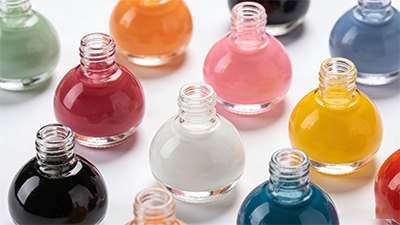
For brands focusing on vintage nail polish bottles, the thickness of the glass wall is a critical design factor. A thicker base—often referred to as a “heavy bottom”—not only adds a premium weight (hand-feel) but also acts as a lens, magnifying the color of the polish and making it more vibrant on the shelf.
2. Technical Specifications: The Anatomy of the Perfect Bottle
When sourcing empty nail polish bottles, a buyer must look beyond the shape. The “neck finish” is the most critical technical specification for preventing leakage and evaporation.
The GPI/GCMI Standards
Most professional nail polish containers utilize the 13/415 or 15/415 neck finish.
- The first number (13 or 15): Refers to the nominal diameter in millimeters.
- The second number (415): Refers to the specific thread style. A 415 finish is a “tall” neck, which allows for a deeper seal between the brush cap and the bottle rim.
A common industry oversight is the “land area”—the very top surface of the bottle neck. If this surface isn’t perfectly flat, even the highest quality cap will fail to create an airtight seal, leading to thickened, unusable polish.
3. The Gel Evolution: Shielding the Formula
The rise of the gel bottle nail polish trend has introduced new manufacturing requirements. Gel polishes are photo-reactive; they cure under UV or LED light. This means the glass must provide 100% opacity.
Coating and Plating Technologies
To achieve this, clear glass bottles undergo specialized secondary processes:
- Powder Coating: A dry finishing process where a polymer resin is electrostatically applied and then cured under heat.
- UV Lacquering: Provides a high-gloss, scratch-resistant finish that completely blocks light.
- Electroplating: Used for metallic finishes (gold, silver, rose gold) that are popular in luxury gel lines.
For a manufacturer, ensuring the interior of the neck remains free of paint is vital. If paint gets into the threads, the friction can cause the cap to seize or the paint to flake into the polish.
4. Design Aesthetics: From Vintage to Modernism
The demand for vintage nail polish bottles has seen a resurgence as brands look to evoke “Old Hollywood” glamour. These designs often feature:
- Fluted Sides: Vertical grooves that catch the light.
- Art Deco Shapes: Octagonal or triangular silhouettes.
- Bakelite-style Caps: Matte, heavy-duty closures that mimic early 20th-century materials.
In contrast, modern minimalism favors the “Boston Round” or “Cylinder” shapes. These shapes are highly efficient for labeling and maximize the clarity of the glass, allowing the pigment of the polish to be the star.
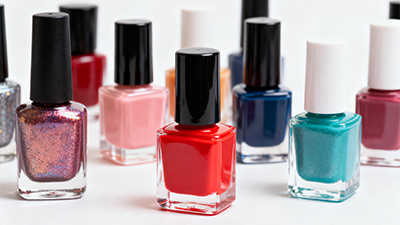
5. Professional Industry Case Study: The “Onyx Series” 15ml Gel Bottle
To understand the practical application of these principles, let’s look at a real-world success story from a leading cosmetic supplier.
Case Study: The Obsidian Gel Collection
Client: A mid-sized European salon brand transitioning from traditional lacquer to a professional gel line.
The Challenge: The client needed a bottle that could protect a highly sensitive UV-curable formula while maintaining a “boutique” aesthetic that justified a higher price point.
The Solution:
- Vessel: A 15ml high-density soda-lime glass bottle with a square footprint for stability during application.
- Technical Implementation: We applied a triple-layer matte black UV coating. Crucially, we utilized a “neck masking” technique during the spray process to ensure the 15/415 threads remained pure glass, guaranteeing a perfect seal.
- The Result: The brand reported a 0% formula degradation rate over 24 months and a 35% increase in retail sales, attributed largely to the “weighted feel” and professional look of the packaging.
6. The Manufacturing Process: From Molten Sand to Finished Product
The production of nail polish bottles involves the “IS” (Individual Section) machine process.
- Melting: Raw materials are heated to roughly 1500°C in a furnace.
- The Gob: A precise “gob” of molten glass is cut and dropped into a blank mold.
- Blowing: Compressed air forms the internal cavity (the “Blow and Blow” or “Press and Blow” method).
- Annealing: This is the most critical step. The bottles pass through an Annealing Lehr—a long, temperature-controlled oven. This relieves internal stresses in the glass. If a bottle is not annealed correctly, it can spontaneously shatter when the user tightens the cap or if the temperature changes slightly.
7. Sustainability and the Future of Glass
As brands move away from single-use plastics, the infinite recyclability of glass becomes a major selling point. Empty nail polish bottles can be cleaned and reused for DIY cuticle oils or customized blends, appealing to the eco-conscious consumer.
Furthermore, the industry is moving toward “Lightweighting”—using advanced mold simulation software to create bottles that use 15-20% less glass while maintaining the same structural integrity. This reduces shipping costs and the carbon footprint of production.
8. Sourcing Advice: How to Vet a Supplier
When searching for nail polish bottles wholesale, always ask for:
- Tolerance Reports: What is the variation in glass thickness?
- Vertical Load Test Data: How much pressure can the bottle take before breaking? (Essential for high-speed filling lines).
- Lead Leaching Tests: Ensure the glass meets FDA or international cosmetic safety standards.
Conclusion
Whether you are seeking the nostalgic charm of vintage nail polish bottles or the high-tech protection required for the gel bottle nail polish, your choice in glass is a statement of quality. By focusing on neck finish precision, annealing quality, and light-blocking technology, you ensure that your product doesn’t just look good on the shelf—it performs perfectly in the hands of the consumer.