 GlassBottleSupplies












Sales manager will contact you within 24 hours
Why structural integrity and seal precision define professional glass jars
The transition from a prototype formulation to a market-ready product often hinges on a single technical decision: the choice of primary packaging. While plastic alternatives offer low cost, the global shift toward sustainability and chemical stability has reaffirmed the glass jar as the definitive standard for high-end cosmetics, topicals, and laboratory samples. However, selecting a small glass jar involves more than aesthetic preference; it requires a deep understanding of glass morphology, brimful capacity versus nominal volume, and the mechanical logic of closure systems.
The Engineering of the Straight-Sided Glass Jar
The most common geometry for professional applications is the straight-sided round jar. Unlike the Boston Round bottle, which is designed for pouring, the 4 oz glass jars with lids are engineered for accessibility. The wide-mouth design allows for 100% product recovery, which is essential for high-value creams and viscous waxes.
From a manufacturing standpoint, the straight-sided jar is a triumph of uniform wall distribution. During the “Press and Blow” or “Blow and Blow” molding process, ensuring that the glass thickness at the “heel” (the bottom curve) matches the “shoulder” (the top curve) is critical. Inconsistent wall thickness creates “cold spots” that are prone to thermal shock breakage during sterilization or hot-filling processes.
Nominal Volume vs. Brimful Capacity
A common point of confusion for procurement teams is the difference between labeled volume and actual capacity. For instance, a 4 oz glass jar typically refers to the “Nominal Volume”—the amount of product it is intended to hold with sufficient “headspace.
However, the “Brimful Capacity” is the absolute maximum volume the jar can hold when filled to the rim. Professional glass manufacturers like those in the glassbottlesupplies.com network provide detailed technical drawings specifying both. If a product expands during freezing or off-gassing, choosing a jar with a generous brimful-to-nominal ratio is a safety requirement.
Dimensional Standards for 2 oz and 4 oz Jars
In the North American and European markets, jar sizes have standardized around the GCMI (Glass Container Manufacturers Institute) neck finishes. This standardization allows for interchangeability between different lid manufacturers and glass houses.
| Format | Typical Diameter | Typical Height | Standard Neck Finish | Common Use Case |
| 2 oz glass jars | 53mm | 48mm | 53-400 | Eye creams, travel-size pomades |
| 4 oz glass jars | 58mm | 65mm | 58-400 | Body butters, salt scrubs, lab samples |
The 53-400 or 58-400 designation is critical. The first number (e.g., 58) represents the diameter of the neck in millimeters. The second number (400) refers to the thread style—in this case, a single-turn continuous thread. For a small glass jar, the precision of this thread determines the “Torque Retention,” which is the ability of the lid to remain tight over time despite changes in temperature or altitude during shipping.
Material Science: Soda-Lime Purity and Chemical Inertness
Most commercial glass jars are made of Type III Soda-Lime glass. This material is favored because it is chemically inert, meaning it does not react with the contents. Unlike many polymers, glass does not contain Bisphenol A (BPA) or phthalates, and it does not suffer from “scoping”—a phenomenon where the packaging absorbs the fragrance or active ingredients of the product.
The Role of Annealing
After the jar is formed, it must pass through an annealing lehr. This is a temperature-controlled kiln that slowly cools the glass to relieve internal stresses. A 4 oz glass jar that has been poorly annealed may look perfect to the naked eye but can shatter spontaneously when touched by a cold metal filling nozzle. Professional-grade jars are regularly tested using a polariscope to visualize residual stress patterns within the molecular structure of the silica.
Case Study: Preserving Terpene Integrity in Premium Topicals
The Subject: A laboratory-grade manufacturer of botanical-infused topicals.
The Problem: The client was using a low-cost small glass jar with a standard plastic lid. Within 30 days of storage, the product’s aromatic profile degraded significantly, and the oil phase began to seep through the threads of the lid.
Investigation (Is it? Why?):
- Is the glass leaking? No. Glass is non-porous.
- Is the lid stripping? No. The threads were intact.
- Why is it failing? The issue was twofold: the “Land Area” (the flat top of the glass rim) was uneven, and the liner material in the lid was incompatible with the botanical oils.
The Solution:
The client switched to a 4 oz glass jars with lids system featuring a “Fine-Ribbed” closure and a PTFE (Teflon) liner. The new jars underwent a stringent “Surface Flatness” check during production.
- The Result: The PTFE liner provided a chemically resistant barrier that prevented the essential oils from attacking the plastic of the cap. The precision-ground land area of the glass ensured a hermetic seal.
- The Outcome: The product’s shelf life was extended by 14 months, and shipping-related leakage was eliminated entirely.

The Logistics of the “Lid-to-Jar” Interface
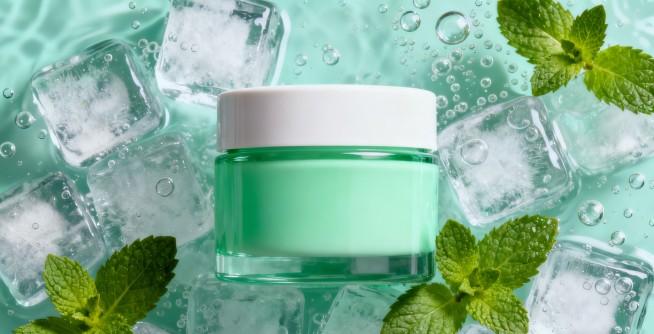
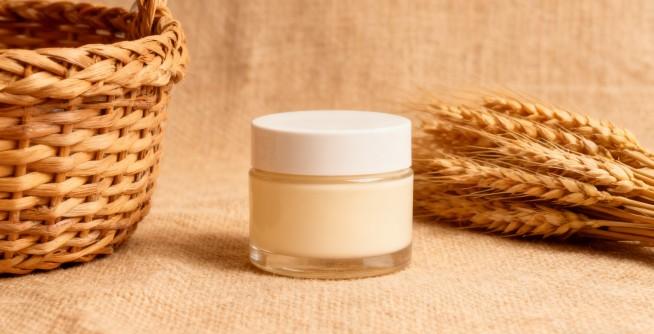
When sourcing 4 oz glass jars with lids, the closure is just as important as the glass itself. Closures are typically available in three materials:
- Polypropylene (PP): Economical, durable, and resistant to most household chemicals.
- Phenolic (Bakelite): Heat resistant and often used for essential oils and aggressive chemicals.
- Metal (Aluminum/Tinplate): Offers a premium aesthetic and excellent barrier properties, though requires a plastisol liner for a vacuum seal.
For a small glass jar, the liner inside the lid is the actual sealing component. Whether it is a F217 foam liner, a pressure-sensitive liner, or an induction seal, it must be matched to the product’s pH level and viscosity.
Environmental Impact and the Circular Economy
Glass jars represent the pinnacle of sustainable packaging. Because a 2 oz glass jar is made from abundant natural raw materials (sand, soda ash, and limestone), its environmental footprint over a long lifecycle is lower than single-use plastics.
Furthermore, the “Refill Model” is gaining traction in the cosmetic industry. Brands are now encouraging customers to keep their high-quality 4 oz glass jars and purchase refills in compostable pouches. This is only possible because glass can withstand repeated washings and high-temperature sterilization (autoclaving) without degrading—a feat most plastics cannot achieve.

Procurement Checklist for Industrial Glass Jars
Before finalizing a bulk order for 2 oz glass jars or larger formats, ensure your quality control team verifies the following:
- Dimensional Accuracy: Ensure the neck finish matches GCMI standards to avoid closure failure.
- Brimful Consistency: Confirm the jar holds the required volume with appropriate headspace for your specific filling machine.
- Surface Treatment: Determine if you need a “Hot End” or “Cold End” coating. These invisible coatings reduce friction on the conveyor belt and prevent the glass from scratching (scuffing) during transit.
- Color Consistency: For clear glass (Flint), ensure the “Extra-White” standard is met to avoid a recycled-green tint that can alter the perceived color of your product.
Summary
The selection of a small glass jar is a technical commitment to product stability. Whether utilizing 2 oz glass jars for concentrated balms or 4 oz glass jars with lids for bulk distribution, the integrity of the glass-to-closure interface is the most critical factor in preventing oxidation and leakage. By adhering to GCMI standards and understanding the material science of soda-lime glass, manufacturers can ensure their packaging reflects the quality of the formulation inside.