 Cam Şişe Malzemeleri












Satış müdürü 24 saat içinde sizinle iletişime geçecektir.
Yapısal Bütünlük ve Termal Yorulma: Lüks Mum Kapları için Mühendislik Standardı
In the high-end fragrance market, the vessel is a critical thermodynamic component that must withstand repeated cycles of intense localized heating and rapid cooling. When sourcing mum kavanozları toptan satışı, the procurement focus often drifts toward aesthetics, yet the true markers of a luxury product are found in the glass’s chemical durability and mechanical precision. A failure to account for the “Liquidus Temperature” or the “Strain Point” of the glass can lead to catastrophic failure in the consumer’s home. Professional cam kavanoz üreticileri must therefore treat each jar as a pressure vessel designed to manage heat flux and chemical stability over a 60-hour lifecycle.
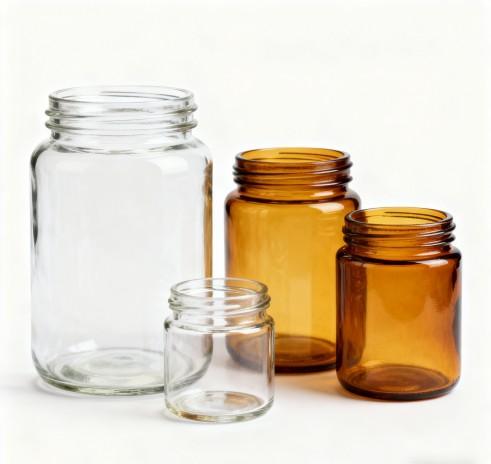
Material Science: Beyond Basic Soda-Lime Glass
While the majority of mum kavanozu tedarikçileri utilize standard Soda-Lime glass, luxury performance often necessitates a “Medium-Borosilicate” or “De-alkalized” substrate. The presence of Boron Trioxide ($B_2O_3$) reduces the Coefficient of Thermal Expansion (CTE), allowing the glass to expand and contract with significantly less internal stress.
For brands utilizing high-load fragrance oils (exceeding 12%), the chemical resistance of the internal glass surface is paramount. Fragrance oils, particularly those containing synthetic musks or citrus terpenes, can act as mild solvents. Over time, these can react with the alkali ions on the glass surface, leading to “Hazing” or a permanent cloudy film. Engineering the glass surface through “Sulfur Treatment” during the annealing phase neutralizes these ions, ensuring the jar remains optically clear until the final burn.
The Engineering of Closure Dynamics in Luxury Systems
Entegrasyonu toptan kapaklı lüks mum kavanozları is a study in mechanical tolerances. The lid serves a dual purpose: scent preservation and safety.
Volatile Organic Compound (VOC) Containment
Fragrance oils begin to dissipate at room temperature. The “Cold Throw”—the scent of the candle when unlit—is maintained by a precision interference fit. A high-performance lid must account for “Outgassing.” If the lid is too airtight and the candle is stored in a warm warehouse, internal pressure can build. The ideal closure uses a “Breathed Gasket” design—a microscopic vent path that allows air pressure to equalize while still trapping heavy fragrance molecules.
Mold Precision: The “H” Dimension
In glass manufacturing, the “H” dimension refers to the vertical distance from the top of the finish to the start of the shoulder. For luxury lids (especially those made of heavy brass or CNC-machined wood), the “H” dimension must have a tolerance of ±0.3mm. If the glass is too tall, the lid will “hover”; if it is too short, the gasket will not engage. This level of precision is only achievable through “Double-Gob” molding processes with synchronized electronic timing.
Technical Performance Matrix: Luxury vs. Commodity Jars
| Teknik Özellik | Commodity Candle Jar | Luxury Engineering Grade |
| Tavlama Sınıfı | ASTM C148 Grade C | ASTM C148 A Sınıfı |
| Internal Stress (psi) | > 750 psi | < 150 psi |
| Color Index (dE) | > 0.5 (Noticeable Tint) | < 0.1 (Water White) |
| Rim Planarity | ± 1,0 mm | ± 0.2mm |
| Thermal Delta (ΔT) | 42°C | 65°C+ |
Genişletilmiş Anlamsal Anahtar Kelimeler:
- Borosilicate Glass Stability
- Precision Neck Finish Standards
- Fragrance Oil Compatibility Testing
Case Study: Mitigating “Flash-Point” Risks and Seal Failure in Outdoor Citronella Luxury Collections
Marka Geçmişi ve Gereksinimler
A luxury lifestyle brand sought to develop a “Grand Terrace” candle—a massive 1.5kg (approx. 53oz) four-wick candle housed in a deep-amber glass jar with a heavy stainless steel lid. The product was designed for high-end outdoor patios, meaning it had to survive direct sunlight (UV exposure) and significant ambient temperature swings (from 15°C at night to 40°C during the day).
Teknik Zorluklar
During initial stress testing, the sheer volume of wax (1.5kg) created a massive “Melt Pool.” The heat generated by four wicks caused the glass surface temperature to reach 110°C. In the prototype phase, the stainless steel lids would “seize” onto the glass due to the differing expansion rates of metal and glass. Additionally, the UV rays from the sun were causing the natural citronella oils to darken and lose their insect-repellent efficacy within weeks.
Teknik Parametreler ve Çözümler
- Vessel Composition: The glass was engineered with a “Iron-Doped Amber” batch, which blocked 99.8% of UV light below 400nm, protecting the essential oils from photo-degradation.
- Thermal Management: We increased the wall thickness to a uniform 6mm and implemented a “Dual-Stage Annealing” process. This involved a second reheat cycle to ensure the thick glass achieved a completely neutral molecular state.
- Closure Solution: To prevent the metal lid from seizing, we engineered a “Floating Gasket” made of High-Consistency Silicone (HCR). The gasket acted as a thermal break, preventing the direct transfer of heat from the glass to the steel lid, while the internal diameter of the lid was increased by 0.5mm to allow for thermal expansion.
Seri Üretim ve Kalite Kontrol Çözümü
A “Power Burn” test was conducted where the 4-wick candles were burned for 8 hours straight. Infrared thermography was used to map the “Heat Zones” on the glass. Jars that showed a temperature variance of more than 15°C across the surface were rejected. We also implemented a “Salt Spray Test” on the stainless steel lids to ensure the outdoor environment wouldn’t cause corrosion or pitting.
Pazar Sonuçları
The “Grand Terrace” candle became a flagship product for the brand, retailing for $220. Despite the extreme heat of the four wicks and the outdoor conditions, there were zero reports of “Thermal Cracking.” The UV-protective amber glass kept the scent fresh for two seasons, securing the brand’s reputation for durability and engineering excellence.
Logistics and Environmental Compliance: The Wholesale Frontier
For global brands, sourcing cam kavanoz üreticileri also involves navigating the “Heavy Metals in Packaging” legislation (such as CONEG in the USA). Luxury jars often use “Lead-Free” crystal or high-clarity flint glass. Verification of “Cadmium and Lead-Free” status is not just a marketing claim but a legal necessity.
Furthermore, the “Carbon Intensity” of the manufacturing process is now a key metric. Modern furnaces are transitioning to “Oxy-Fuel Combustion,” which reduces Nitrogen Oxide (NOx) emissions by 80%. When evaluating mum kavanozu tedarikçileri, auditing their furnace technology is as important as auditing their design capabilities.
Consumer Haptics: The Psychology of the “Click”
In the luxury segment, the consumer’s perception of value is tied to the “Damping Factor” of the packaging. A jar that rings like a bell when tapped is often perceived as “thin.” A jar with high wall thickness and a precision-fitted lid provides a “Deadened” acoustic response. This “Acoustic Luxury” is a deliberate engineering goal, achieved by managing the density of the glass and the durometer (hardness) of the lid’s sealing ring.
FAQ: Expert Technical Summary
Q: Can 100% PCR (Post-Consumer Recycled) glass be used for 4-wick candles?
A: It is risky. PCR glass often contains “stones” (unmelted ceramic particles). In a high-heat environment like a 4-wick candle, these stones act as stress concentrators and can cause the jar to shatter. For multi-wick candles, a maximum of 25-30% high-quality cullet is recommended.
Q: What is the “Thermal Gradient” limit for a standard 100ml vs. 500ml jar?
A: Larger jars actually face higher risks. A 500ml jar has more surface area and thus a greater chance of having a temperature delta between the top and bottom. Anything over a 40°C difference across the glass surface requires specialized annealing.
Q: Why do some luxury lids use a “Plastic Inner” with a “Metal Outer”?
A: This is called a “Bi-Material” closure. The plastic inner (usually PP) provides the threading and seal flexibility, while the metal outer provides the weight and premium feel. It also prevents “Metal-on-Glass” grinding, which can create glass dust.