 GlassBottleSupplies












Sales manager will contact you within 24 hours
The Geometric Logic of the Boston Round: Engineering the Universal Standard in Glass Packaging
The Archetype of Radial Strength: Defining the Boston Round
The boston round bottle is often viewed as a simple container, yet its silhouette is a masterpiece of stress distribution. In glass engineering, the presence of sharp angles is an invitation to structural failure. The characteristic rounded shoulders and cylindrical body of boston bottles ensure that internal and external pressures are distributed evenly across the surface. This is particularly critical in the “Blow-and-Blow” manufacturing process, where air pressure expands a molten parison against a cold metal mold.
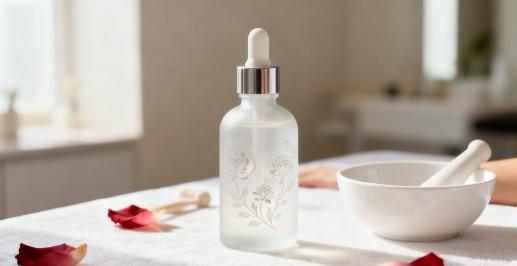
When we analyze the geometry of a boston round bottle, we focus on the “Radius of Curvature” at the shoulder. A tighter radius allows for more efficient shelf-packing but increases the risk of “Thin Shoulders,” a defect where the glass wall is dangerously thin at the curve. High-end industrial production utilizes “Individual Section” (IS) machines with electronic timing to ensure that the glass distribution is uniform, maintaining a minimum wall thickness of 1.2mm even in a compact 2 oz boston round bottles format.
Material Science: The Cobalt Blue Spectrum and Ionization
The boston blue bottle (often referred to as Cobalt Blue) is more than an aesthetic choice for the wellness industry; it is a specialized optical filter. Unlike amber glass, which uses iron and sulfur to block UV light, cobalt glass is created by adding Cobalt Oxide ($CoO$) to the silica melt. This creates a glass matrix that is exceptionally effective at filtering specific wavelengths while allowing visible blue light to pass.
From a material science perspective, the “color” of a boston blue bottle is the result of cobalt ions absorbing the red and green portions of the light spectrum. However, engineers must be wary of “Ion Leaching” in low-quality cobalt glass. If the furnace temperature is not maintained at an exact $1450°C$, the cobalt ions may not fully integrate into the silica lattice, potentially migrating into aqueous solutions—a nightmare for clean-beauty brands focusing on “purity” and “non-toxicity.”
Table 1: Technical Comparison of Boston Round Substrates
| Metric | Amber Boston Round | Cobalt Blue Boston Round | Clear (Flint) Boston Round |
| UV Cut-off (nm) | < 450nm | < 300nm | N/A |
| Visible Light Protection | High | Moderate (High Blue) | Low |
| Surface Energy (mN/m) | 72 | 74 | 70 |
| Recycled Content (Cullet) | Up to 60% | Up to 25% | Up to 40% |
| Primary Use | Pharmaceuticals | Essential Oils/Serums | Food & Beverage |
The Mechanics of the 2 oz Neck Finish: Dosing and Sealing
The 2 oz boston round bottles size is the industry standard for trial kits and travel-sized cosmetics. However, the smaller the bottle, the more critical the “Neck-to-Body Ratio” becomes. An 18/400 or 20/400 neck finish on a 2 oz vessel requires a high degree of precision in the “E.M.S.” (Effective Measurement of Surface).
In a high-speed filling line, the capping torque applied to boston bottles must be consistent to prevent “Thread Stripping.” If the mold seam (the vertical line where the two halves of the bottle mold meet) is too prominent at the neck, it can create a “micro-leak” path. We solve this through “Precision Polishing” of the mold joints and the use of “Vacuum-Assisted Takeout” arms that prevent the hot glass from deforming as it leaves the IS machine.
Case Study: Stabilizing a Photosensitive Peptoid Serum in Cobalt Blue
Brand Background and Requirement
A California-based clinical skincare brand required a 2 oz boston round bottles solution for a new “Liquid Oxygen” serum. The formula was highly volatile and extremely sensitive to light in the 300-380nm range. The brand’s identity was built around the boston blue bottle, but they faced a technical hurdle: the oxygen in the formula was reacting with the liner material of the cap, causing the bottles to “bloat” or leak during air shipment.
Technical Challenges
Compatibility testing revealed that standard PE (Polyethylene) liners were porous enough to allow oxygen to migrate into the plastic, causing it to swell and break the seal. Furthermore, the blue glass from their previous supplier had a “Wavy” surface (known as “Orange Peel”), which made it impossible for their high-end silk-screened labels to adhere without bubbling.
Technical Parameter Settings
- Glass Composition: Type III Flint glass with 0.12% Cobalt Oxide enrichment for a deeper blue density.
- Surface Treatment: “Hot End” Tin Oxide coating followed by a “Cold End” Polyethylene wax to ensure a smooth, label-ready surface.
- Seal Integrity: Transitioned to a “Saran-faced” Pulp and Foil liner. Saran (PVDC) provides an exceptional gas barrier that prevented the oxygen from interacting with the pulp backing.
- Torque Standard: Set to 15-18 in-lb for automated capping, with a removal torque check after a 24-hour dwell period.
- Hydrostatic Pressure Test: The bottle was rated to withstand 1.5 bar of internal pressure to account for high-altitude air cargo expansion.
Mass Production and Quality Control
During mass production, we implemented an “Automatic Side-Wall Inspection” (ASW) using high-resolution cameras to detect “Seeds” (air bubbles) or “Stones” (unmelted silica) larger than 0.5mm. To ensure the cobalt density was consistent, we used a spectrophotometer to verify the “Transmittance Value” at 350nm for every batch, ensuring it remained below 5%.
Final Market Performance
The product launch was a success with a 0% return rate for leakage. The cobalt blue glass, combined with the smooth surface treatment, allowed the brand to use a metallic “Mirror Finish” label that adhered perfectly. The shelf-life stability was extended from 12 months to 22 months, significantly reducing the brand’s risk in global distribution.
The Sustainable Supply Chain: Lightweighting the Boston Round
As global logistics costs rise, the “Weight-to-Volume” ratio of boston bottles has come under scrutiny. “Lightweighting” is the process of using advanced mold simulations to reduce the glass weight without sacrificing the “Vertical Crush Strength.”
For a standard boston round bottle, we can often reduce the glass weight by 15-20% by optimizing the distribution of the “Heel” (the bottom corner). This not only reduces the carbon footprint of the shipping process but also reduces the energy required in the furnace to melt the raw materials. However, lightweighting must be balanced with the “Luxury Hand-Feel.” In the prestige market, a 2 oz bottle that feels too light can be perceived as “Cheap,” so we often maintain a “Heavy Base” while thinning the side walls to maintain a premium haptic experience.
Photochemical Stability vs. Consumer Perception
The choice of a boston blue bottle is often a tug-of-war between engineering and marketing. While amber glass provides superior UV protection across a broader spectrum, the cobalt blue bottle offers a psychological association with “Freshness” and “Water.”
From an engineering perspective, we can “Boost” the protection of blue glass by applying a UV-absorbent internal coating or by increasing the glass thickness. This allows the brand to maintain the blue aesthetic while achieving the chemical stability required for high-potency vitamins or botanical extracts. This “Hybrid Approach” is common in the boston round bottle sector, where visual branding is as important as molecular preservation.
Professional FAQ
Q1: Why are Boston bottles called “Boston” rounds?
A: While the exact historical origin is debated, the term became the industry standard in the 19th and early 20th centuries to describe a specific “Druggist” bottle style. In engineering terms, it refers to a bottle with a width nearly equal to its shoulder height, providing a low center of gravity and high stability on laboratory and retail shelves.
Q2: Is a 2 oz boston round bottles format suitable for hot-fill products?
A: Yes, provided the glass is “Annealed” correctly. Hot-filling (typically at 85-90°C) creates a thermal shock. Type III soda-lime glass can handle a temperature differential ($\Delta T$) of about 35-40°C. For higher temperature differentials, we recommend pre-heating the bottles or moving to a Borosilicate glass, though Borosilicate is rarely found in the standard Boston round silhouette.
Q3: How do I choose between a glass dropper and a treatment pump for a boston round bottle?
A: This depends on the “Product Viscosity.” A dropper is ideal for low-viscosity oils in boston bottles, but for high-viscosity lotions, a pump is required. From a sealing standpoint, pumps often have a more complex “Mounting Gasket” that requires a higher application torque than a standard dropper cap to ensure a hermetic seal.
Q4: Can cobalt blue glass be recycled with clear or amber glass?
A: No. Cobalt blue glass is considered a “Contaminant” in clear or amber recycling streams because the cobalt ions are extremely powerful colorants. Even a small amount of blue glass can turn a clear batch “Aqua.” For a sustainable supply chain, blue boston bottles must be sorted into their own specific recycling stream.