 Поставки стеклянных бутылок












Менеджер по продажам свяжется с вами в течение 24 часов.
Молекулярная целостность и эстетическая точность: Инженерная наука о стеклянных контейнерах для сиропа
The transition of a liquid formulation from a laboratory beaker to a consumer’s hand is a journey fraught with chemical risks and physical variables. In the specialized realm of high-viscosity liquids—often categorized under the umbrella of “syrups” in both the pharmaceutical and cosmetic industries—the choice of primary packaging is not merely a branding exercise. It is a critical engineering decision. For glassbottlesupplies.com, understanding the intersection of silicate chemistry, precision molding, and fluid dynamics is essential for any brand seeking long-term stability and market prestige.
The Material Physics of Borosilicate vs. Soda-Lime in Syrup Storage
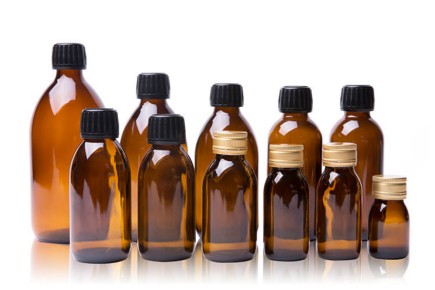
При обсуждении сироп в стеклянной бутылке applications, the conversation must begin with the chemical composition of the substrate. Most commercial “syrup” bottles are manufactured from Type III soda-lime glass. However, for formulations with active botanical extracts or volatile aromatic compounds, the hydrolytic resistance of the glass surface becomes a pivot point for product shelf-life.
The internal surface of a glass container is not inert. Ion exchange occurs when an aqueous syrup remains in contact with the glass walls for extended periods. Sodium ions from the glass matrix can migrate into the liquid, potentially shifting the pH of the formulation. For cosmetic syrups—such as concentrated hyaluronic acid serums or niacinamide boosters—a pH shift can lead to active ingredient degradation or “clouding” (flaking).
Advanced manufacturing now utilizes surface treatment technologies, such as ammonium sulfate treatment during the annealing lehr phase, to neutralize surface alkalinity. This creates a dealkalized interior, providing the chemical stability of Type I glass at a Type III price point. This is particularly vital for миниатюрные бутылки для сиропа used in sample sets, where the surface-area-to-volume ratio is high, amplifying the impact of any chemical migration.
Thermal Expansion and Structural Integrity
Syrup formulations are often filled using “hot-fill” processes to reduce viscosity and ensure microbial safety. This introduces the variable of thermal shock. The coefficient of linear expansion ($3.3 \times 10^{-6}/K$ for borosilicate vs. $9.0 \times 10^{-6}/K$ for soda-lime) dictates how the bottle reacts when a 85°C liquid meets a 20°C glass surface. Engineering the mold to ensure uniform wall distribution—avoiding “thin spots” at the heel or shoulder—is the primary defense against thermal stress fractures during high-speed filling lines.
Precision Engineering of the Neck Finish and Closure Compatibility
A common failure point in бутылки для сиропа is the “syrup creep” or crystallization at the neck. Because syrups contain high concentrations of solids (sugars, polymers, or gums), the evaporation of moisture at the seal interface leads to residue buildup. This residue can compromise the torque required to open the bottle or, worse, break the hermetic seal.
The Geometry of the Pour
The lip design of бутылки сироп manufacturers must account for the “Teapot Effect.” Through precision mold machining, the radius of the pouring lip is engineered to ensure that the fluid’s surface tension pulls the last drop back into the container rather than allowing it to dribble down the exterior. This involves a sharp cut-off angle in the glass finish, a detail often overlooked by generalist suppliers but scrutinized by packaging engineers.
Seal Integrity and Liner Science
Для миниатюрные бутылки для сиропа, the closure system is as important as the glass itself. The choice of liner material—expanded polyethylene (EPE), Saranex, or Teflon-faced silicone—must be dictated by the solvent profile of the syrup.
- Вкладыши EPE: Excellent for general aqueous syrups.
- Silicone/PTFE: Required for essential oil-heavy cosmetic syrups to prevent essential oil absorption into the liner (scalping), which would otherwise weaken the fragrance profile over time.
Case Study: Stabilizing a Photosensitive Botanical Serum
To illustrate the technical rigor required in this field, let us examine a recent challenge faced by a boutique clinical skincare brand specializing in “Vitamin C Syrups.”
Общие сведения о бренде и требования к нему
The client developed a high-potency serum with a 15% L-Ascorbic Acid concentration. The formula was highly viscous (resembling a light syrup) and extremely sensitive to UV and HEV (High Energy Visible) light. The requirement was a 30ml container that could guarantee 24-month stability while maintaining a premium “heavy-glass” hand feel.
Технические проблемы
Initial testing with standard amber glass showed a 12% degradation of active ingredients within six months. Furthermore, the high viscosity of the syrup caused “clogging” in standard dropper assemblies, and the acidic nature of the formula led to the degradation of standard nitrile rubber bulbs.
Технические параметры и настройка
The engineering team pivoted to a multi-layered approach:
- Субстрат: High-density cobalt blue glass with an added UV-absorbent spray coating, filtering out wavelengths below 450nm.
- Толщина стенки: Increased to 4mm at the base to lower the center of gravity and provide a thermal buffer.
- Система закрытия: A custom-engineered pump with a glass ball valve (rather than stainless steel) to prevent oxidation reactions with the acidic serum.
- Стандарты крутящего момента: Set to 1.2–1.5 Nm (Newton Meters) to ensure a gas-tight seal while remaining accessible to the consumer.
| Параметр | Спецификация | Result |
| Light Transmission (500nm) | < 1.5% | Formula Stability Maintained |
| Вертикальная нагрузочная способность | > 150 kgf | Zero breakage during 12-tier palletizing |
| Степень отжига | Grade A (ASTM C148) | Minimal internal stress |
| Surface Alkalinity | < 0.5ml 0.01N HCl | No pH drift detected over 12 months |
Массовое производство и контроль качества
During production, we implemented an Automated Optical Inspection (AOI) system to detect “stones” (unmelted raw materials) or “seeds” (tiny air bubbles) larger than 0.1mm. Such defects are not just aesthetic issues; in pressurized filling environments, they act as stress concentrators that can lead to catastrophic failure.
Показатели рынка
The product launched with zero reported stability issues. The “cold-to-the-touch” feel of the heavy glass became a signature part of the brand’s sensory marketing, and the precision pump ensured that the syrup remained uncontaminated by oxygen throughout its use.
Sustainability and the Circular Economy in Glass Manufacturing
In the modern supply chain, сироп в стеклянной бутылке production is increasingly scrutinized for its carbon footprint. Glass is infinitely recyclable, but the energy required for the furnace (melting at 1500°C) is significant.
The Role of Cullet
Advanced manufacturing facilities for glassbottlesupplies.com are increasing the percentage of “cullet” (recycled glass) in the batch. Every 10% increase in cullet reduces energy consumption by approximately 3% and $CO_2$ emissions by 5%. However, managing the purity of cullet is essential to prevent color contamination, especially for clear (flint) бутылки для сиропа.
Light-weighting Technology
Through NNPB (Narrow Neck Press and Blow) technology, we can now produce сироп в стеклянной бутылке containers that are 15-20% lighter without sacrificing structural strength. This reduces transportation emissions and material costs, aligning with the sustainability goals of global cosmetic conglomerates.
Профессиональные вопросы и ответы
Q1: Why does my syrup formulation develop crystals around the bottle neck?
This is typically due to “wicking” where the liquid moves into the threads via capillary action. Using a bottle with a “drip-back” finish and ensuring the correct liner-to-glass compression ratio can significantly reduce this occurrence.
Q2: Can I use flint (clear) glass for a light-sensitive syrup if I use a UV coating?
Yes. While amber glass is naturally UV-resistant due to iron and sulfur oxides, clear glass can be treated with an external UV-absorbing organic coating. This allows consumers to see the product color while protecting the internal chemistry.
Q3: What is the benefit of “Heavy Base” glass for miniature syrup bottles?
Beyond the luxury perception, a heavy base lowers the center of gravity. For small, narrow bottles, this prevents tipping on automated conveyor belts during the filling and labeling process, reducing downtime and breakage.
Q4: How do I choose between a GL18 and a DIN18 neck finish?
While they are often cross-compatible, DIN18 is a European standard specifically designed for dropper inserts. If your syrup requires precise dosing (drops), the DIN18 finish ensures the insert seats perfectly for a leak-proof seal.