 GlassBottleSupplies












Sales manager will contact you within 24 hours
Precision Engineering and Photochemical Integrity: A Comprehensive Guide to Essential Oil and Serum Packaging Systems
The intersection of dermaceutical efficacy and material science is most visible at the primary packaging level. For specialized formulations like high-potency oils and volatile serums, selecting a vessel is not merely an aesthetic choice but a technical necessity to prevent molecular degradation. This analysis explores the industrial complexities of borosilicate and soda-lime glass, the mechanical physics of volumetric dispensing, and the rigorous compliance standards governing the modern global supply chain.
Material Science: Beyond the Surface of Glass Manufacturing
When procuring wholesale oil bottles with dropper systems, the conversation must begin with the chemical composition of the glass itself. Most commercial packaging utilizes Type III soda-lime glass, but for premium essential oils containing high concentrations of terpenes or acidic compounds, the hydrolytic resistance of the inner surface is paramount.
The manufacturing process involves a precise thermal equilibrium. During the “hot end” of production, bottles undergo a de-alkalization process where sulfur dioxide is introduced to neutralize surface alkali oxides. This prevents “glass bloom” or leaching, which can shift the pH of a sensitive facial oil. For brands sourcing 1 oz dropper bottles wholesale, understanding the expansion coefficient of the glass is vital for surviving the rapid temperature fluctuations during sterilization or transit in non-climate-controlled logistics.
Color chemistry adds another layer of protection. Amber glass is not merely a dye; it is a functional filter achieved through the addition of iron, sulfur, and carbon. This specific blend creates a spectral transmission barrier that cuts off ultraviolet (UV) light below 450nm, protecting photosensitive ingredients like Retinol or Vitamin C from photo-oxidation.
The Engineering of Volumetric Precision and Closure Integrity
The “dropper” is a multi-component machine consisting of the pipette, the elastomer bulb, and the polypropylene (PP) or aluminum shroud. In a professional B2B context, the term 10 ml eye dropper bottle implies a level of precision that goes beyond simple suction.
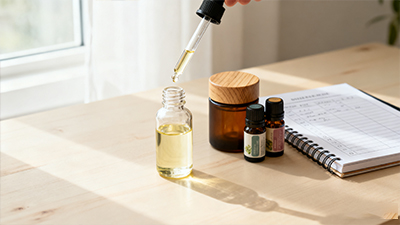
Pipette Calibration and Tip Geometry
The discharge volume of a dropper is dictated by the surface tension of the liquid and the outer diameter of the pipette tip. Engineering departments often choose between “straight tip,” “ball tip,” or “bent tip” geometries to control the drop size. For high-viscosity oils, a larger orifice is required to prevent “clogging” via air-lock, while low-viscosity essential oils require a narrowed tip to ensure the consumer does not over-dispense expensive product.
Elastomer Compatibility (The Bulb)
The bulb is the most overlooked failure point in serum packaging. Standard Nitrile or Natural Rubber bulbs often swell or degrade when they come into contact with aggressive essential oils (like citrus or peppermint). Technical specifications should instead favor Medical Grade Silicone or Thermoplastic Elastomers (TPE). These materials offer superior gas barrier properties, preventing the “headspace” oxygen from permeating the bulb and rancidifying the oil inside.
Dimensional Standards and Label Engineering
Designers often struggle with the 1 oz dropper bottle label size, leading to peeling edges or “flagging.” A standard 30ml (1 oz) Boston Round typically has a label panel height of approximately 1.5 to 1.75 inches and a circumference of 4.1 inches. However, because glass is a molded product, a “shrinkage factor” exists.
To ensure seamless application, engineers recommend a “gap” of 2-3mm between the label ends rather than a full wrap. This allows for slight variances in bottle diameter. Furthermore, for oil-based products, the label substrate must be a synthetic film (BOPP or PE) rather than paper, coupled with an oil-resistant matte or gloss over-laminate to prevent the ink from dissolving upon contact with the product.
Technical Specification Comparison Table
| Feature | Soda-Lime Glass (Type III) | Borosilicate Glass (Type I) |
| Hydrolytic Resistance | Moderate | High |
| Thermal Shock Resistance | Up to 40°C ΔT | Up to 120°C ΔT |
| Primary Use | Bulk Wholesale Serums | Laboratory/High-Acid Reagents |
| Light Protection | Depends on Colorant | Superior (if Amber) |
| Recyclability | 100% (Infinite) | Difficult (High Melting Point) |
Case Study: Solving Delamination and Oxidation in High-Potency Vitamin C Serums
Brand Background and Requirement
A clinical-grade skincare brand required a packaging solution for a new 15% L-Ascorbic Acid (Vitamin C) serum. The formulation was exceptionally unstable, prone to rapid browning upon exposure to light and oxygen. The brand insisted on a 30ml format that felt “weighty” and premium but met medical-grade stability standards.
Technical Challenges
Initial stability tests using standard clear glass with a simple UV coating failed within three weeks. The serum oxidized, and more concerningly, the high acidity of the formula caused the internal coating of the plastic pipette shroud to delaminate, resulting in “micro-plastic” flakes appearing in the serum.
Engineering Parameters and Solution
The engineering team moved away from surface coatings and implemented a “Solid Amber” glass structure with a wall thickness of 3.5mm to increase the thermal mass.
- Glass Composition: Low-alkali soda-lime glass with internal de-alkalization.
- Closure System: A three-piece child-resistant closure (CRC) with a glass pipette.
- Gasket/Liner: The team selected a PTFE-faced (Teflon) silicone liner. PTFE is chemically inert, providing a total barrier between the acidic serum and the plastic cap.
- Torque Standard: Application torque was set at 12-18 inch-pounds to ensure a vacuum seal without stripping the threads.
- Light Exclusion: Lab results confirmed 99.8% blockage of light in the 200nm-400nm range.
Mass Production and Quality Control
During the production of the bulk amber glass vials, an automated “Vision System” was used on the conveyor line to check for “seeds” (air bubbles) and “stones” (unmelted raw material) in the glass, which can create structural weak points. Each batch underwent a “leaktightness” vacuum test at -0.5 bar for 30 minutes.
Final Market Performance
The product launched successfully with a 24-month shelf life. Market feedback highlighted the “drip-free” experience and the lack of discoloration, which boosted consumer trust and led to a 40% re-order rate within the first quarter.
Logistics and Sustainable Supply Chain Management
The global procurement of glass involves significant carbon footprints. However, glass remains the “gold standard” for sustainability due to its infinite recyclability. Modern factories are now adopting “Electric Melting” furnaces to reduce CO2 emissions during the molten stage.
When evaluating a supplier for precision dispensing glass droppers, it is essential to audit their “Cullet” ratio (the percentage of recycled glass used in the melt). A higher cullet ratio not only lowers energy consumption but also improves the chemical durability of the final bottle. Furthermore, for the “Last Mile” of delivery, corrugated dividers must be high-strength to prevent glass-on-glass friction, which causes “scuffing”—micro-scratches that compromise the aesthetic of premium cosmetic packaging.
Final Perspectives on Consumer Psychology
The “click” of a dropper and the weight of the glass bottle are sensory cues that signal quality to the consumer. In the luxury segment, the tactile feedback of the elastomer bulb—neither too stiff nor too soft—creates a ritualistic experience. By focusing on the technical harmony between the formula and the vessel, brands can eliminate the “hidden costs” of returns, leaks, and degraded product efficacy.
FAQ
Q: Can I use 10 ml eye dropper bottles for essential oils without risk of leakage?
A: Yes, provided the closure is engineered with a “plug seal” or a specific liner like PE or PTFE. For essential oils, ensure the bulb is made of TPE or Silicone, as traditional rubber will disintegrate over time.
Q: What is the most common reason for label failure on 1 oz dropper bottles?
A: Usually, it is “oil migration.” If even a tiny amount of oil drips during the filling process, it can seep behind the label. Using an oil-resistant adhesive and a synthetic BOPP material is the professional standard to prevent this.
Q: Is there a difference between “Painted” amber and “Solid” amber glass?
A: Significant difference. Painted or “sprayed” glass is clear glass with a surface tint. It can scratch and may not provide the same level of UV protection. Solid amber glass is colored throughout the material during the melting process and offers superior photochemical protection.