 ガラス瓶用品











営業担当者が24時間以内にご連絡いたします
2026年精密ガラス射出成形ボトル調達ガイド
In the high-stakes world of packaging, the line between “Pharmaceutical” and “Cosmetic” is vanishing.
As we approach 2026, the hottest trend in high-end beauty is “Clinical Efficacy.” Consumers are no longer satisfied with standard jars; they demand the freshness and potency associated with medical-grade delivery systems. This shift has thrust the humble 注射用バイアル—once the exclusive domain of vaccines and antibiotics—into the spotlight of the luxury beauty and perfume sectors.
For brand owners and procurement managers, this creates a complex sourcing landscape. You are likely navigating a mix of terminology: from the specific dimensions of a 10mlガラスバイアル注射用瓶 to the manufacturing nuances of 射出ブロー成形ボトル. This guide deconstructs these terms, analyzing the physics of hermetic sealing, the chemistry of Type I glass, and the supply chain logic required to source medical-grade packaging for commercial success.
1. Defining the “Injection Bottle”: Product vs. Process
Before sourcing, we must clarify the terminology, as the keyword 注射用バイアル creates confusion in the supply chain. It refers to two distinct concepts depending on the material.
The Pharmaceutical Definition (Glass)
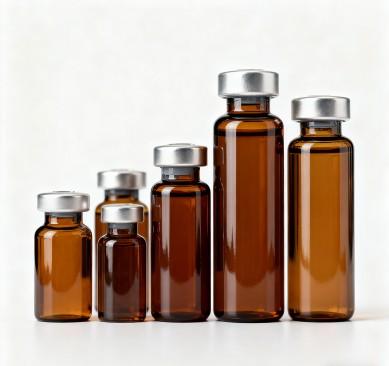
In the glass industry, an 注射用バイアル (or injection vial) refers to a small-volume container designed to hold a liquid or freeze-dried powder intended for parenteral administration (injection via syringe).
- Key Feature: A “Crimp Neck” (ISO 8362 standard). The bottle does not have screw threads. It is sealed with a rubber stopper and an aluminum crimp cap.
- 使用方法: Vaccines, antibiotics, and increasingly, “Lyophilized (Freeze-Dried) Skincare Powders.”
The Manufacturing Definition (Plastic)
When you see the term 射出ブロー成形ボトル (IBM), this almost exclusively refers to プラスチック manufacturing (HDPE, PP, PET).
- プロセス: Polymer is injected into a “preform” mold (creating the precise neck finish), then transferred to a blow mold where air expands it into the final bottle shape.
- Relevance: While this article focuses on glass, understanding IBM is crucial because many “travel perfume sprays” are hybrid assemblies: a glass inner vial inside an 射出ブロー成形 plastic casing.
2026 Industry Reality: High-end brands are moving away from plastic IBM containers for primary storage due to sustainability and chemical leaching concerns. The focus is returning to the ガラス製注射用ボトル for its chemical inertness and premium weight.
2. The Anatomy of a 10ml Glass Vial Injection Bottle
その 10mlガラスバイアル注射用瓶 is the “Goldilocks” size of the industry. It is small enough for a single course of treatment (or a 2-week cosmetic ampoule) but large enough to handle on standard filling lines.
Tubular vs. Molded Glass
Not all 10ml vials are created equal. You must choose between two manufacturing technologies:
A. Tubular Glass Vials (The Converter Method)
- プロセス: The factory buys long glass tubes (canes) from a raw material supplier (like Schott, Corning, or NEG). These tubes are loaded into a rotary machine which cuts them and uses flames to form the neck and bottom.
- Characteristics:
- 壁厚: Very thin and uniform (approx. 1.0mm).
- 重量: Extremely light.
- 明瞭さ: Superior optical clarity.
- アプリケーション: This is the standard for the 10mlガラスバイアル注射用瓶 used in freeze-drying because the thin walls allow for rapid heat transfer during the lyophilization process.
B. Molded Glass Vials (The IS Machine Method)
- プロセス: Molten glass gobs are dropped into a mold and blown into shape.
- Characteristics:
- 壁厚: Thicker, more robust.
- 重量: Heavier feel.
- ID Markings: Often has mold numbers embossed on the bottom.
- アプリケーション: Used for aggressive chemicals or when the brand wants a “luxury weight” feel.
The Neck Finish: 20mm Crimp
あるものの基準 10mlガラスバイアル注射用瓶 is the 20mm Crimp Finish.
- Why 20mm? Smaller vials (2ml) use 13mm. But 10ml vials need a wider opening (20mm) to allow the filling needles and freeze-drying stoppers (lyo-stoppers) to function efficiently at high speeds.
3. The Material Science: Type I vs. Type II vs. Type III
調達する際 ガラス製注射用ボトル, the glass composition dictates the price and the shelf-life of the product.
Type I: Neutral Borosilicate Glass
- Chemistry: Contains Boron Trioxide.
- Coefficient of Expansion: Low (33 or 51 expansion). This means it resists thermal shock (rapid freezing and heating).
- 耐加水分解性: Extremely high. It does not leach alkali (sodium) into the liquid.
- Mandatory For: Injectable drugs, pH-sensitive serums, and high-end 香水瓶 applications where the scent profile must remain unaltered for years.
Type II: Treated Soda-Lime Glass
- プロセス: Standard soda-lime glass that has undergone “Sulfur Treatment” (inner surface de-alkalization) to neutralize the surface.
- 使用方法: Cheaper injectables. Not recommended for high-end cosmetics as the treatment can degrade over time.
Type III: Soda-Lime Glass
- Chemistry: Standard glass (like a beer bottle).
- 使用方法: Oral syrups, oils. NOT suitable for aqueous injection liquids or lyophilized powders, as the glass can raise the pH of the liquid, spoiling the product.
Buying Tip for 2026: If you are launching a “Cosmeceutical” serum in a ガラス製注射用ボトル, 指定する Type I Middle Borosilicate Glass. It is the balance point between the expensive USP Type I (Schott) and the cheaper Type III.
4. The Crossover: Bottle for Injection Perfume
One of the most interesting niche markets is the 香水瓶. This term is often a translation nuance referring to Crimped Neck Perfume Vials.
Why use an “injection” style crimp for perfume?
The Hermetic Seal Advantage
A screw-cap perfume bottle can “back off” (loosen) during shipping due to vibration, leading to leakage and oxidation. A crimped ガラス製注射用ボトル is a permanent mechanical seal.
- The Component Chain: Glass Vial + Pump Engine + Metal Collar (Ferrule).
- The Assembly: The pump is placed in the vial. A collet machine crimps the metal collar under the glass rim (just like a medical vial). This seal is impossible to break without tools.
The “Sampler” Economy
The 2ml to 5ml 香水瓶 (sampler) is essentially a miniature medical vial.
- Standard: Tubular glass.
- 閉鎖: Instead of a rubber stopper, it uses a snap-on or crimp-on spray actuator.
- 2026年のトレンド We are seeing “Serum-Perfume” hybrids—fragrances suspended in gel, packaged in 10mlガラス瓶 注射用バイアル with dropper tops that pierce a rubber seal, borrowing the ritual of medical administration for fragrance application.
5. Case Study: The “Lyo-Fresh” Skincare Revolution
To illustrate the technical sourcing of 注射用バイアル, let’s examine a real-world product architecture (based on 2024-2025 market launches).
製品: “Vita-C Cryo-Active.” A pure Vitamin C powder (Ascorbic Acid) that activates only when mixed with a solvent. 問題: Vitamin C oxidizes in water within 48 hours, turning brown. It cannot be sold pre-mixed in a standard dropper bottle.
The Packaging Solution: その Dual-Chamber Injection System.
- The Container: A 10mlガラスバイアル注射用瓶 (Type I Clear Tubular Glass).
- The Content: The Vitamin C is liquid-filled, then the bottle is placed in a Freeze Dryer. The liquid sublimates, leaving a stable “cake” of powder.
- 終幕: A “Lyo-Stopper” (rubber stopper with a side notch). During freeze-drying, the stopper sits half-open to let vapor escape. Afterward, the machine presses it down to seal it under a vacuum.
- The Consumer Experience: The user receives the sealed ガラス製注射用ボトル and a separate bottle of “Activator Serum.” They tear off the aluminum flip-cap, pour the serum in, shake, and attach a dropper nozzle.
Why this worked: The brand utilized the 注射用バイアル infrastructure to solve a chemical instability issue, allowing them to sell a “medical grade” product at a premium ($85 for 10ml).
6. Manufacturing Logistics: Injection Blow Molding (IBM) vs. Glass Converting
Understanding the manufacturing process helps in negotiation.
If you ask a glass factory for 射出ブロー成形ボトル, they will correct you. Glass is not injection molded in the plastic sense because molten glass is too viscous and hot (1200°C) for standard injection screws.
The Glass Supply Chain
- The Tubing Manufacturer: Huge furnaces draw glass tubes (canes) 24/7. (e.g., Schott in Germany, NEG in Japan, or domestic giants in China).
- The Converter (Vial Manufacturer): These factories buy the tubes. They run “Vial Forming Machines.”
- Throughput: A single line can produce 3,000 vials per hour.
- Quality Check: Cameras check the “Total Height” and “Mouth Inner Diameter.”
- The Annealing Lehr: After forming, the ガラス製注射用ボトル is passed through an oven to remove stress. If not annealed properly, the bottle will shatter during the crimping process.
The Plastic IBM Alternative
もしあなたの 香水瓶 is a travel spray refill:
- The inner vessel might be glass (for chemical stability).
- The outer casing is injection blow molded (for aesthetic shape and durability).
- Sourcing Strategy: You usually need two suppliers—one for the glass vial, one for the plastic IBM outer shell. Some “Packagers” will kitting them together, but buying direct is cheaper.
7. Quality Control: The “Headspace” and Dimensions
購入するとき 10mlガラスバイアル注射瓶, 90% of quality issues happen at the neck.
The “A” and “B” Dimensions
- d1 (Inner Diameter of Mouth): Critical for the rubber stopper. If too small, the stopper pops up. If too large, the seal is loose. Tolerance is usually ±0.1mm.
- d2 (Outer Diameter of Lip): Critical for the aluminum crimp cap. If the lip is too thick, the aluminum skirt won’t wrap under it securely.
Cosmetic Defects
In the medical world, a scratch is a reject. In the cosmetic world, a scratch is a disaster.
- Tubular Glass Scuffing: Since vials touch each other on the conveyor, they can get “scuff rings.”
- Solution: Specify “Glazed” or “Fire Polished” bottoms, and ensure the factory uses “scratch-free” loading trays (often made of delrin or teflon) rather than metal-on-glass contact.
8. 2026 Trends: Customization and Sustainability
The generic clear vial is evolving.
1. Silk Screen Printing on Vials
Traditionally, 注射用バイアル are labeled with paper stickers. In 2026, premium brands are using Ceramic Silk Screen Printing. The ink is baked onto the glass tube. It creates a “No-Label Look” that feels incredibly high-end and clinical.
2. “Flip-Off” Caps Customization
The cap of an 注射用バイアル is usually a plastic disc sitting on an aluminum ring.
- カスタマイズ: You can emboss your logo into the plastic flip-top.
- Color Coding: Brands use color (e.g., Gold Aluminum + Matte White Plastic) to code different concentrations of serum.
3. Sustainability in Glass
- Recycled Content: While Type I glass is hard to make with PCR (Post-Consumer Recycled) content due to purity requirements, brands are focusing on the recyclability of the ガラス製注射用ボトル.
- 分離可能性: The user must be able to remove the aluminum crimp ring to recycle the glass. Brands are including “decrimping tools” in the box to aid in this process.
結論
その 注射用バイアル has graduated from the hospital to the vanity table.
For brand owners, the 10mlガラスバイアル注射用瓶 represents the pinnacle of product protection. It offers a hermetic seal that no screw-cap can match, a chemical inertness that preserves active ingredients, and a visual language that speaks of clinical precision.
調達しているのが 香水瓶 samples or a lyophilized skincare system, success lies in understanding the material (Type I Glass), the manufacturing (Tubular Conversion), and the closure mechanics (Crimping). By mastering these specifications, you move beyond buying simple containers to engineering a preservation system for your product.