 ガラス瓶用品










営業担当者が24時間以内にご連絡いたします
分子の不活性と構造の完全性:プレミアムガラス製シロップ包装のエンジニアリングガイド
The Physics of Viscosity and the Geometry of the Pour
の選択である。 syrup bottle glass vessel transcends mere aesthetics; it is a complex calculation of fluid dynamics and material science. When dealing with high-viscosity liquids—whether they are artisanal culinary syrups or concentrated botanical extracts for the cosmetic industry—the interaction between the liquid and the inner surface of the glass determines the user experience and product longevity.
Glass, as an amorphous solid, provides a unique set of benefits over polymers. Its non-porous nature ensures that volatile organic compounds (VOCs) do not migrate into the product, preserving the organoleptic properties of the syrup. For those sourcing small maple syrup bottles, the focus often shifts to the “surface tension management” of the bottle neck. A poorly engineered finish leads to “syrup creep,” where residual liquid crystallizes around the threads, compromising the seal and frustrating the end-user.
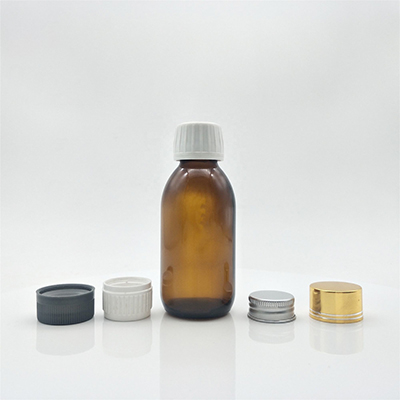
From an engineering perspective, the transition from the bottle shoulder to the neck must follow a specific radius to facilitate a laminar flow. If the angle is too abrupt, air pockets form during the pouring process, leading to “glugging,” which can cause splashing and inaccurate dosing in professional settings.
Material Science: Soda-Lime Silica vs. Thermal Stress
ほとんど 瓶入りシロップ containers are manufactured using Type III soda-lime glass. However, the specific “batch” chemistry is what separates a generic container from an industrial-grade vessel. The inclusion of Alumina ($Al_2O_3$) enhances chemical durability, while the precise balance of Calcium Oxide ($CaO$) ensures the glass remains stable under varying pH levels.
For applications involving 瓶詰め用シロップ瓶, thermal shock resistance is the primary technical hurdle. During the pasteurization or hot-fill process, the glass undergoes rapid temperature fluctuations.
Table 1: Comparative Material Properties for Syrup Packaging
| 不動産 | Standard Soda-Lime | High-Clarity Flint Glass | Amber Protective Glass |
| 耐水解性 | Class 3 | Class 3 | Class 2/3 |
| Light Transmission (400nm) | 90% | > 92% | < 10% |
| Thermal Expansion ($CoE$) | 8.5 – 9.0 | 8.8 – 9.2 | 8.0 – 8.5 |
| Annealing Point | 540°C | 550°C | 530°C |
| Ideal For | Standard food use | High-end clarity aesthetics | Light-sensitive botanicals |
The refractive index of the glass also plays a role in the “shelf-presence.” High-flint glass provides a brilliance that makes the syrup’s natural color pop, whereas amber glass is essential for syrups containing light-sensitive vitamins or natural pigments that degrade under UV exposure.
The Engineering of the Hermetic Seal
A bottle is only as good as its closure. In the world of apothecary syrup containers, the interface between the glass finish and the cap is where most failures occur. We define this as the “Seal Interface Zone.”
When engineering a leak-proof solution, one must consider the “Torque Retention” properties. Glass is rigid, but the liners within the caps (typically PE, PP, or Silicone) are viscoelastic. Over time, these materials undergo “stress relaxation.” A bottle designed for long-distance shipping must have thread geometry that maintains a constant downward pressure on the liner, even when subjected to the vibrations of maritime or air freight.
For small maple syrup bottles used in gift sets, the “evacuation force”—the effort required to open the bottle—must be balanced. It needs to be tight enough to prevent oxidation but accessible enough for the consumer. This is measured in Inch-Pounds (in-lb) of removal torque, a standard quality control metric in packaging engineering.
Case Study: Stabilizing a Light-Sensitive Botanical Syrup
Brand Background and Requirement
A European boutique brand specializing in high-potency “Glow Serums” (formulated as a high-viscosity botanical syrup) required a new vessel. The formula contained a high concentration of Vitamin C and Ferulic Acid, both of which are notoriously unstable when exposed to light and oxygen. The brand moved away from plastic due to concerns regarding micro-plastic leaching and perceived value.
Technical Challenges
The primary challenge was “Photo-oxidation.” The serum would turn from a pale straw color to a dark orange within 14 days of exposure to ambient store lighting. Additionally, the high sugar content of the botanical base caused “Cap-Lock,” where the bottle became impossible to open after the first use due to syrup crystallization in the threads.
Technical Parameter Settings
To solve this, our engineering team implemented the following specifications:
- Glass Substrate: Heavy-base flint glass with an internal UV-absorbing coating (blocking 98% of light below 390nm).
- 壁厚: A minimum of 4mm at the base to provide “Thermal Mass,” slowing down temperature fluctuations during transport.
- Closure System: A custom 18/415 ribbed cap with a specialized “S-Curve” thread profile to minimize surface contact with the syrup.
- ライナー材質: A tri-layer Acid-Resistant F217 (PE Foam) liner with a Teflon (PTFE) facing to ensure the syrup could not bond to the liner surface.
- Torque Standard: Application torque set at 12-15 in-lb; Removal torque tested after 48 hours at 40°C.
Mass Production and Quality Control
During production, we utilized “Hot End” and “Cold End” coating applications. The Hot End coating (Tin Oxide) strengthens the glass surface, while the Cold End coating (Polyethylene Wax) reduces the coefficient of friction, preventing the bottles from scratching each other on the assembly line. Every batch underwent a “Vacuum Leak Test” at -0.5 bar for 30 minutes to simulate high-altitude air cargo conditions.
Final Market Performance
The brand reported a 40% increase in shelf-life stability. The “Cap-Lock” issue was eliminated, reducing customer returns by 92%. The heavy-base glass design significantly increased the perceived “luxury weight,” allowing the brand to increase their MSRP by 15% without consumer pushback.
Sustainability and the Circular Economy of Glass
In the modern supply chain, the weight of the glass is a double-edged sword. While consumers equate weight with quality, logistics managers see carbon footprints. The industry is currently moving toward “Lightweighting”—using advanced mold simulations to redistribute glass thickness to the stress points while thinning out non-critical areas.
Furthermore, the recyclability of syrup bottle glass is unparalleled. Unlike multi-layer plastics, glass can be recycled infinitely without loss of purity. For brands utilizing 瓶詰め用シロップ瓶, the ability to reuse the vessel multiple times through high-temperature sterilization cycles makes glass the most economically viable option for circular business models.
The Psychological Impact of Glass Geometry
Beyond the chemistry and the math, there is the “Haptic Feedback” of the bottle. A 瓶入りシロップ container that feels balanced in the hand communicates a sense of craftsmanship. The “thud” of a glass bottle on a marble countertop versus the “clack” of plastic influences a consumer’s subconscious perception of the ingredient’s purity.
We often analyze the “Crest and Trough” of the bottle’s silhouette. For maple syrups, a traditional “Jug” handle or a rounded “Flask” shape triggers a sense of heritage and authenticity. For cosmetic syrups, a minimalist “Cylinder” with sharp shoulders denotes medical-grade precision and modernism.
Professional FAQ
Q1: Why is “Headspace” critical when hot-filling ガラス製シロップ瓶?
A: When filling syrup bottles for canning at high temperatures (typically 85-90°C), the liquid occupies more volume than it does at room temperature. If the headspace is too small, the internal pressure during cooling can create a vacuum so intense that it either compromises the seal or makes the bottle nearly impossible to open. Conversely, too much headspace allows for excessive oxygen, which can lead to oxidation of the syrup.
Q2: What causes “Bloom” on glass bottles, and how is it prevented?
A: “Bloom” or “Weathering” is the appearance of a white, cloudy residue on the glass surface, caused by the leaching of alkali ions when exposed to moisture. In high-end syrup bottle glass manufacturing, this is prevented by controlled storage environments and the use of de-alkalization treatments (such as Ammonium Sulfate treatment) during the annealing process to improve chemical resistance.
Q3: Can small maple syrup bottles be used for essential oil-infused syrups?
A: Yes, but with a caveat. Essential oils can act as solvents on certain plastic liners. For these applications, we recommend a glass vessel with a “Phenolic” cap and a “Polycone” liner. This conical liner creates a wedge-type seal into the neck of the bottle, providing a superior chemical barrier compared to standard flat liners.
Q4: How does glass thickness affect the “Perceived Value” vs. “Shipping Cost” ratio?
A: In the luxury segment, a “Heavy Base” (often called “Luxury Weight”) can increase the bottle’s weight by 50-100%. While this increases shipping costs, the “conversion rate” at the point of sale often offsets these costs. From a technical standpoint, thicker glass also offers better insulation against rapid temperature changes, which protects the chemical integrity of the syrup.