 GlassBottleSupplies












Sales manager will contact you within 24 hours
Is Your Nail Polish Packaging Leaking Profits? A Manufacturer’s Guide
In the high-stakes world of color cosmetics, the bottle is more than just a container; it is a chemical engineering system. Whether you are an indie brand filling empty nail polish bottles in a garage or a large-scale manufacturer sourcing wholesale nail polish bottles by the container load, the failure points are the same. Solvent evaporation, brush deformation, and UV curing can destroy a product before it ever touches a customer’s nail.
Before we ask why your brand should choose a specific design, we must first ask: Is the bottle technically compatible with your chemical formula?
This guide moves beyond aesthetics to explore the critical manufacturing standards of nail lacquer packaging, from the science of gel bottle nail polish protection to the resurrection of vintage nail polish bottles in modern branding.
1. The Neck Finish Standard: Is It a True 13/415?
If you are sourcing empty nail polish bottles, you will constantly see the code “13/415.” This is not a random number; it is the global standard for nail polish neck finishes.
- 13mm: The outer diameter of the thread (the neck opening).
- 415: The specific thread style (how many turns the cap takes to close).
The “Is It” Check: Many generic suppliers selling wholesale nail polish bottles offer “approximate” 13/415 necks. A deviation of just 0.2mm in the thread pitch means the cap will screw on, but it won’t seal airtight.
- The Consequence: Nail polish relies on volatile solvents (butyl acetate, ethyl acetate) to stay liquid. If the seal isn’t perfect, these solvents evaporate. The polish becomes thick, gloopy, and unusable within weeks.
- The Professional Solution: Always demand a “Go/No-Go Gauge” test report from your supplier. This ensures that every single bottle in the batch fits the standard cap tolerance exactly.
2. The Gel Polish Crisis: Is It Truly Light-Proof?
The market has shifted heavily toward UV/LED cured gels. This brings a specific challenge for gel bottle nail polish. Gel formulas contain “photoinitiators”—chemicals that harden when exposed to light.
The Dangerous Misconception: Many brands assume that a dark amber or blue bottle is sufficient. It is not. Standard colored glass still allows certain UV wavelengths to penetrate. If even a fraction of UV light enters, the gel will cure inside the bottle, turning into a solid rock around the brush.
The Manufacturing Solution: To safely package gel bottle nail polish, we use a 4-Layer Spray Coating Process:
- Base: The bottle starts as clear glass.
- Opacifier Layer: A completely opaque black or white coating is sprayed to block 100% of UV light.
- Color Layer: The aesthetic color (brand color) is applied on top.
- Finish Layer: A matte or glossy topcoat for tactile feel.
Why this matters: When you buy wholesale nail polish bottles for gel lines, you are not paying for the glass; you are paying for the coating integrity. A cheap coating will scratch, letting light in. A premium coating is your product’s life support.
3. The Brush Mechanics: Is the Stem Length Correct?
The most common consumer complaint isn’t about the glass; it’s about the brush. When you buy empty nail polish bottles and caps separately, you risk a “tolerance mismatch.”
The “Bottom-Out” Problem: If the brush stem is 1mm too long, the bristles hit the bottom of the glass. Over time, the bristles bend permanently (a “J” shape). When the customer applies the polish, the bent brush makes a messy streak. The “Unreachable” Problem: If the stem is 2mm too short, the customer can’t reach the last 20% of the product. They feel cheated.
The Fix: We calculate the “wipe distance.”
- For a standard 15ml bottle, the brush stem must be calibrated so the bristles hover exactly 0.5mm to 1mm from the glass floor.
- Material Science: For traditional lacquers, standard Nylon bristles are fine. For aggressive solvent-based gels or “5-free” formulas, we recommend PBT (Polybutylene Terephthalate) filaments. PBT resists chemical swelling, ensuring the brush stays thin and precise over time.
4. Branding Trends: Is It Time for Retro?
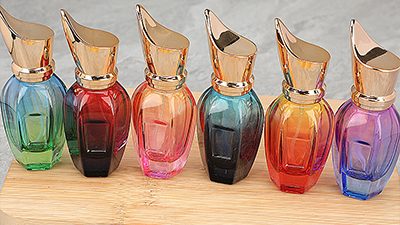
In a sea of round, generic bottles, we are seeing a massive surge in demand for vintage nail polish bottles.
What defines “Vintage”? It is not about using old glass (which is brittle); it is about using Art Deco molds.
- Faceted Glass: Bottles with sharp, geometric edges that catch the light like a perfume bottle.
- Small Capacities: While modern bottles are 15ml, vintage styles often favor 10ml or 8ml sizes, reflecting a time when polish was a rare luxury.
- Tall Caps: The defining feature of vintage nail polish bottles is the elongated, tapering wand cap.
The Manufacturing Challenge: Square or faceted bottles have “sharp corners.” In glass molding, sharp corners are the hardest to fill evenly. They often become weak points.
- Our Approach: When producing faceted designs for wholesale nail polish bottles, we use a slower cooling process (annealing). This prevents thermal shock cracks in the detailed corners of the vintage design.
5. Real-World Case Study: The “Melting Cap” Disaster
The Client: NeonClaw Cosmetics (A startup brand specializing in neon, glow-in-the-dark polishes). The Order: 10,000 units of square empty nail polish bottles with “soft-touch” matte black caps, sourced from a budget trader.
The Incident: Two months after launch, customers reported that the caps were becoming “sticky” and leaving black residue on their fingers. Worse, the brush stems were detaching from the caps and falling into the bottle.
The Root Cause Analysis (Is it the glue? No. Is it the Plastic? Yes.): We analyzed the failed components.
- Solvent Attack: The nail polish contained high levels of Ethyl Acetate (a common solvent).
- Wrong Material: The caps were made of Polystyrene (PS). While PS is cheap and looks good, it dissolves when exposed to acetate vapors. The fumes from the polish were literally melting the plastic cap from the inside out.
- Adhesive Failure: As the plastic dissolved, the glue holding the brush stem liquefied, causing the brush to drop.
The Solution: We took over the supply chain for NeonClaw.
- Material Switch: We replaced the caps with Polypropylene (PP) or Phenolic (Bakelite) material. These plastics are chemically inert and impervious to solvent vapors.
- Double-Walled Cap: To maintain the “large” look the client wanted without using heavy plastic, we created a double-walled cap: an inner PP cap for the seal (chemical resistance) and an outer ABS shell for the matte decoration.
The Result: The “sticky cap” issue vanished. The brand recovered its reputation and has since expanded to a gel bottle nail polish line using our UV-proof coating technology.
6. Sourcing Wholesale: The Logistics of Weight
When you buy wholesale nail polish bottles, you are shipping heavy, dense glass.
Is your shipping optimized?
- The Tray Pack: Bottles are shrink-wrapped in plastic trays. This is the cheapest method but risky. If the pallet drops, the shock transfers through the glass.
- The Cell Divider: This is mandatory for gel bottle nail polish or painted bottles. Cardboard dividers prevent the bottles from rubbing against each other.
- Why? Vibration during trucking causes “scuffing.” If a black gel bottle gets scuffed, the coating comes off, light gets in, and the product is ruined.
Weights and Measures: A standard 15ml glass bottle weighs approximately 35g. A 10,000 unit order weighs 350kg (plus packaging).
- Pro Tip: Always fill the shipping container. Shipping “air” is expensive. If you are ordering empty nail polish bottles, consider adding caps and brushes in the same shipment to maximize density and lower your landed cost per unit.
Conclusion: The Chemistry of Packaging
Success in the nail industry is not just about the color of the lacquer; it is about the integrity of the vessel. A beautiful bottle that leaks, a brush that curls, or a gel bottle that cures on the shelf will kill a brand faster than bad marketing.
Whether you are looking for the nostalgic elegance of vintage nail polish bottles or the technical rigor of gel bottle nail polish containers, you need a partner who understands the chemistry behind the glass.