 GlassBottleSupplies












Sales manager will contact you within 24 hours
Is Your Design Too Expensive to Manufacture? The Reality of Sourcing Perfume Glass
In the luxury fragrance market, the bottle is the loudest signal of value. A consumer’s eye is drawn to the sparkle of an antique perfume bottle replica or the audacious silhouette of a perfume in shoe bottle. But for the brand owner, these designs represent a minefield of manufacturing costs and quality control risks.
Many brands design a bottle on paper without asking the fundamental manufacturing question: Is this geometry compatible with mass production physics?
Before we explore why certain designs become bestsellers, we must analyze the “Yield Rate Economics” of glass manufacturing. Whether you are sourcing utilitarian perfume tester bottles or intricate antique glass perfume bottles, understanding the production line is the only way to protect your profit margins.
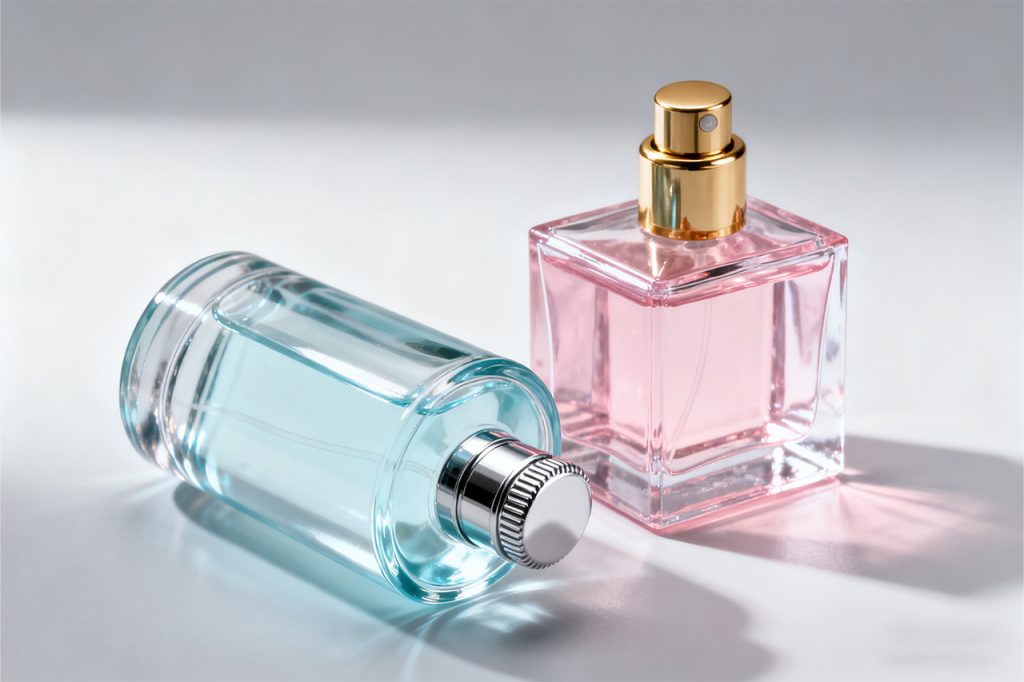
1. The “Shoe” Paradox: When Geometry Fights Gravity
The perfume in shoe bottle is the perfect case study for “Complex Geometry.” It is iconic, viral, and incredibly difficult to make.
Is the mold release possible? Standard bottles are vertical. The mold opens left-and-right, and the bottle sits there. A high-heel shoe shape is asymmetrical and top-heavy.
- The Undercut Issue: The space between the heel and the sole creates a “negative draft angle.” A standard mold cannot open without breaking the glass heel.
- The Engineering Solution: To produce a perfume in shoe bottle, we utilize “Slide Mechanism Molds.” Parts of the mold move downwards or outwards on a specific angle before the main mold opens.
- Cost Implication: These molds wear out 40% faster than standard cylinder molds due to the friction of moving parts.
Is the glass distribution safe? The heel of the shoe is solid glass (thick). The part holding the perfume is hollow (thin).
- Thermal Stress: Thick glass holds heat longer than thin glass. As the bottle travels through the annealing lehr (cooling oven), the heel contracts at a different rate than the body.
- The Risk: Without extended annealing times (slowing down the entire production line), the internal tension will cause the heel to “check” (crack) internally.
- The Buyer’s Check: When sourcing these, you must demand a Polariscope Examination. If you see a rainbow pattern at the junction of the heel and sole, the bottle has high residual stress and may shatter on the shelf.
2. The Economics of the “Tester”: Don’t Treat It as Waste
Perfume tester bottles are often an afterthought in the supply chain, yet they constitute 5-10% of total volume.
Is it a separate production run? Never. Sourcing a dedicated mold for testers is financial suicide.
- The Strategy: The tester should always be the exact same glass as the retail unit. The differentiation is in the secondary processing.
- The Cost Savings:
- No Metallization: If your retail bottle is gold-plated, your perfume tester bottles should be clear glass.
- No Hot Stamping: Replace expensive foil stamping with simple one-color silk screen printing.
- The Box: Testers ship in “corrugated partitions,” not rigid gift boxes.
The “Capless” Standard: Testers often sit on lighted shelves. Heat from the lights can expand the liquid.
- Safety Valve: We often recommend leaving perfume tester bottles capless or using a simple plastic “travel clip” to prevent accidental spraying. This also discourages theft, as the bottle looks “incomplete” without the heavy retail cap.
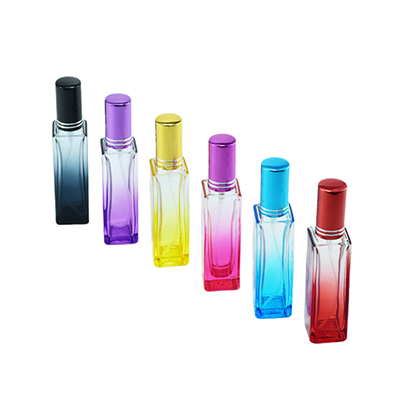
3. The “New Antique”: Reproducing Heritage Quality
The trend for antique glass perfume bottles—featuring heavy bases, cut-glass patterns, and faceted stoppers—is booming in the Niche Fragrance sector. Customers want the weight of history.
Is it Pressed or Blown? To achieve the sharp, crisp edges of an antique perfume bottle (like the Art Deco style), the “Blow-and-Blow” method is often insufficient. It creates soft, rounded edges.
- The Solution: We often use “Press-and-Blow” for these designs. A plunger presses the glass into the faceted mold to ensure the “diamond cut” patterns are sharp and catch the light.
The Fire Polishing Necessity: An authentic antique perfume bottle from the 1920s was often hand-polished. In mass production, we simulate this with Fire Polishing.
- After the bottle leaves the mold, it passes through a high-intensity gas flame.
- This melts the microscopic outer layer, erasing the “mold seam” lines and giving the glass a glossy, liquid finish that mimics expensive crystal.
- Note: This process adds cost but is non-negotiable for brands claiming a “luxury vintage” aesthetic.
4. The Cap Connection: The Illusion of the Stopper
The most defining feature of antique glass perfume bottles is the glass stopper (the dabber). However, modern consumers demand spray pumps.
Is it functional? You cannot have a glass stopper and a spray pump.
- The Design Hack: We engineer “Over-Caps.”
- The bottle has a standard FEA 15 crimp neck with a low-profile pump.
- The Cap is molded from Surlyn (a high-transparency resin) or Heavy Zamac (metal) and designed to look like a crystal stopper. It clicks over the pump collar.
- The Weight: To mimic the feel of a real antique perfume bottle, we add a weighted insert inside the cap. When the customer lifts it, the heft convinces them of the quality.
5. Real-World Case Study: The “Victorian Rose” Failure
The Client: Heritage Scents (A UK-based brand focusing on single-floral notes). The Concept: A reproduction of a 19th-century antique perfume bottle with intricate floral relief patterns embossed directly onto the glass surface.
The Initial Sourcing Mistake: The client hired a generic food-jar manufacturer to make the mold. The manufacturer used standard “Soda Lime” glass without clarification.
- The “Orange Peel” Effect: The glass surface was bumpy and uneven, ruining the intricate floral embossing. The flowers looked like blobs.
- The Labeling Nightmare: Because the entire bottle was covered in embossed flowers, there was no flat surface to stick a label. The client tried to stick a paper label over the bumps; it wrinkled and fell off.
The Correction (Is it Printable? No. Is it Decoratable? Yes.): We took over the engineering.
- Material Switch: We moved to Super Flint glass to ensure the embossing was crisp and visible without bubbles.
- Mold Modification: We created a “Label Panel” in the mold—a smooth, flat oval space amidst the floral pattern specifically designed to hold a metal nameplate.
- The “Rubbing” Technique: To highlight the antique glass perfume bottles‘ floral pattern, we applied a “black wash” and then wiped it off (a ceramic technique). The black ink stayed in the crevices of the flowers, making the pattern pop against the clear glass.
The Result: The bottle won a packaging design award. By integrating the decoration area into the mold design, the brand saved $0.15 per unit on labeling labor costs while achieving a truly authentic antique perfume bottle look.
6. Sourcing Strategy: The Hidden Cost of “Decorating Curves”
If you choose a perfume in shoe bottle or a rounded antique perfume bottle, you must budget for “Non-Standard Decoration.”
Is Silk Screen Possible? Silk screen machines rotate the bottle. They work on cylinders. They cannot print on a shoe shape or a faceted square.
- The Alternative:Pad Printing (Tampon Printing).
- A soft silicone pad picks up the ink and “stamps” it onto the irregular surface.
- Limitation: Pad printing is slower and usually limited to smaller logos.
- The Workaround: Many brands using complex shapes avoid printing on the glass entirely. They use “Charms” (metal tags hanging from the neck) or printed plaques glued to the bottle. This bypasses the difficulty of printing on complex glass geometries.
Conclusion: Balancing Art and Engineering
The glass bottle is where the ethereal nature of perfume meets the hard reality of manufacturing. A perfume in shoe bottle captures the imagination, but requires precise mold engineering. Perfume tester bottles require strategic inventory planning. Antique glass perfume bottles require high-grade materials to avoid looking like cheap reproductions.
Your supplier should not just be an order taker; they should be a “Feasibility Consultant.” They should look at your design and ask: “Is the neck finish strong enough for the cap weight?” and “Is the center of gravity low enough to prevent tipping on the filling line?”