 GlassBottleSupplies












Sales manager will contact you within 24 hours
Is Your Bottle Invisible on the Shelf? The Art of Differentiating Standard Polish Packaging
Walk into any beauty supply store, and you are greeted by a wall of color. Hundreds of shades, dozens of brands, but look closer at the glass. You will notice a pattern: 80% of the brands are using the exact same cylinder or square bottle shape.
For a brand owner, sourcing wholesale nail polish bottles is a battle between budget and distinctiveness. You want to be unique, but you don’t want to pay $15,000 for a private mold.
Before we ask why a customer picks up one brand over another, we must ask: Is your packaging signaling the right price point and product category?
In this guide, we explore how to turn generic empty nail polish bottles into iconic branding assets, the surging trend of vintage nail polish bottles, and the visual language required for gel bottle nail polish.
1. The “Stock” Dilemma: Is a Private Mold Worth It?
When you browse a catalog of wholesale nail polish bottles, you are looking at “Public Molds.” These are designs owned by the glass factory, available to anyone.
Is it time for a custom shape? The industry rule of thumb is the 50,000 Unit Threshold.
- Below 50k units: The cost of opening a private mold (approx. $3,000 – $5,000 USD for the mold + minimum production runs) is usually too high per unit. You should stick to stock empty nail polish bottles and differentiate via decoration.
- Above 50k units: You can amortize the mold cost. A unique shape (e.g., a heart, a star, or an ergonomic grip) becomes your IP (Intellectual Property). It prevents counterfeits.
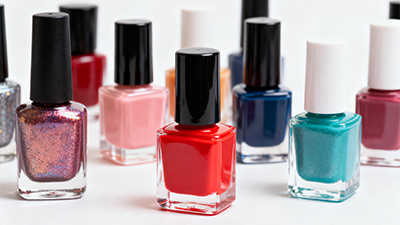
The “Why”: If you use a standard round bottle, you are competing solely on the liquid color. If you use a custom shape, the silhouette becomes the trademark (think of the iconic curves of OPI or the square of Essie).
2. The Vintage Revival: Is Old the New Luxury?
There is a massive shift in the indie nail market away from “modern minimalist” toward “maximalist nostalgia.” This is driving the demand for vintage nail polish bottles.
Is the design historically accurate? True vintage aesthetics from the 1920s-1950s relied on Art Deco principles.
- The “Tower” Cap: Vintage bottles often feature very long, tapering caps (wands) that mimic the handle of a calligraphy pen or a cigarette holder.
- The Faceted Glass: Unlike the smooth cylinders of today, vintage nail polish bottles often have ridges, steps, or “sunburst” patterns molded into the glass base.
Why this sells: Nail polish is an affordable luxury. A consumer might not be able to afford a vintage Chanel bag, but they can afford a $18 bottle of polish that looks like it belongs on a 1940s Hollywood vanity table. Brands utilizing this “heirloom aesthetic” are commanding 30-50% higher retail prices than those in standard bottles, even if the liquid cost is the same.
3. Visual Coding: The Gel vs. Lacquer Confusion
One of the biggest mistakes we see when clients order wholesale nail polish bottles is mixing up the visual language of the product categories.
Is your bottle telling the customer what it is?
- Regular Lacquer: Consumers expect to see the color. They want clear glass.
- Gel Bottle Nail Polish: Consumers associate “Professional Gel” with technical packaging.
The “Color-View” Problem in Gels: Since gel bottle nail polish must be opaque to block UV light, the customer cannot see the color.
- The Amateur Fix: Using a generic sticker on top of the cap. This looks cheap and often peels off.
- The Professional Fix:“Peek-a-boo” Spraying or 3D Cap Inserts.
- Peek-a-boo: We spray the entire bottle opaque color-matched to the gel, but leave a tiny, precise window at the bottom. (Requires high-end UV blocking clear glass).
- Cap Inserts: The cap has a clear plastic lens on top. During filling, a drop of the actual gel is deposited into the cap lens and cured. This shows the customer the exact cured color, not just a printed approximation.
4. Decoration Economics: Silk Screen vs. Hot Stamp
You have bought standard empty nail polish bottles. Now you need to label them.
Is your decoration durable against Acetone? This is the “Is It” question that bankrupts startups.
- Paper Labels: Acetone (nail polish remover) dissolves label adhesive. If a customer spills remover on your bottle, the label slides off.
- Direct Silk Screening: Ink is printed directly on the glass and baked. It is acetone resistant.
- Cost: High setup fee, low unit cost. Best for 5,000+ units.
- Hot Stamping: Foil (Gold/Silver) is pressed onto the glass.
- Warning: Standard hot stamping rubs off with acetone. You must specify “Chemical Resistant Foil” when ordering wholesale nail polish bottles. It costs 15% more but ensures your logo stays gold, not black, after one use.
5. Real-World Case Study: The “Salon Shelf” Failure
The Client: Lumina Nails (A chain of salons launching a home-use retail line). The Product: A 3-step Gel System (Base, Color, Top). The Packaging: They chose standard 15ml clear empty nail polish bottles and spray-painted them solid black to save money. They used a simple paper sticker on the front for the logo.
The Problem:
- The “Blind” Shelf: When placed on the retail shelf, all the bottles looked identical (black blobs). Customers had to pick up each bottle and read the tiny bottom sticker to find the color “Red.”
- The Peeling: The spray paint used was not “scratch resistant.” After being tossed in customers’ purses, the black paint chipped, revealing the clear glass. UV light entered, curing the gel inside the bottle.
The Solution: We re-engineered their gel bottle nail polish supply chain.
- Color-Matched Soft Touch: Instead of black bottles, we used “Soft-Touch Coating” (rubberized feel) that was color-matched to the liquid inside. The red gel came in a matte red bottle; the blue gel in a matte blue bottle.
- Result: The shelf became a rainbow of colors, instantly attracting attention. The “Soft-Touch” added a sensory premium feel.
- UV Barrier: The color coating was formulated with a specific UV-blocker additive, ensuring the gel remained liquid even in the colored bottles.
The Outcome: Sales increased by 200% in the first month. The “visual friction” of finding a color was removed. The product looked like a high-end cosmetic rather than a generic salon supply.
6. Logistics of the “Empty”: Handling and Filling
For clients buying empty nail polish bottles to fill domestically, the breakage rate is a major KPI (Key Performance Indicator).
Is your filler compatible with the bottle shape?
- Stability: Tall, narrow “Vintage” bottles have a high center of gravity. On a high-speed conveyor belt, they wobble and fall like dominoes.
- The Fix: If you choose a vintage shape, you need “Pucks” (holders) for your filling line.
- The Brush Insertion: Inserting the brush into the bottle is the hardest part of automation. If the neck of your wholesale nail polish bottles is too narrow (e.g., an 11mm neck instead of 13mm), the bristles will splay backward (the “bad hair day” effect). Always stick to the 13/415 standard to ensure smooth brush insertion.
Conclusion: The Bottle is the Experience
In the nail industry, the user interacts with the package more than almost any other cosmetic. They hold the cap (the tool) in their hand for 20 minutes while painting. They shake the bottle. They display it.
Whether you are capturing the current trend with vintage nail polish bottles, establishing authority with technical gel bottle nail polish packaging, or maximizing margins with wholesale nail polish bottles, the key is intentionality.
Don’t just fill a glass container. Engineer a user experience.