 GlassBottleSupplies









Sales manager will contact you within 24 hours
Frosted Green Glass Dropper Bottles: The 2026 Strategic Asset for Botanical Brands
In the hyper-competitive beauty landscape of 2026, the “Amber Glass Era” is fading. While amber remains the clinical standard for pharmaceuticals, the cosmetic and wellness sectors—specifically CBD, hemp, and organic skincare—are migrating toward a more narrative-driven material: the frosted green glass dropper bottle.
Why is this specific vessel conquering the “Masstige” (Mass Prestige) and Luxury markets? It is not merely about the color emerald. It is about the convergence of UV science, tactile neuromarketing, and shelf velocity.
For brands sourcing dropper bottle components, the decision to move to green glass is a signal to the consumer: “What is inside is alive, potent, and plant-derived.” This guide explores how to leverage the 1 oz dropper bottles and 2 oz dropper bottle formats to maximize price elasticity and brand equity in the coming year.
1. The Semiotics of Color: Why Green? Why Frosted?
Packaging is the silent salesman. In 0.2 seconds, a consumer scans a shelf and categorizes your product based on visual cues.
The “Medicinal” vs. “Botanical” Divide
- Amber Glass: Signals “Apothecary,” “Old World,” or “Prescription.” It is trusted but feels dated and generic in 2026.
- Clear Glass: Signals “Purity” but implies “Synthetic” (lab-made). It also offers zero protection for natural ingredients.
- Green Glass: Signals “Life,” “Photosynthesis,” and “Active Botanicals.”
When you utilize a frosted green glass dropper bottle, you are layering a second signal: Texture. Glossy glass feels cold and industrial. Acid-etched (frosted) glass feels soft, akin to sea glass or a leaf’s surface. This “Soft-Touch” effect triggers a neurological response associated with luxury and care. A consumer is 60% more likely to pick up a frosted bottle to “test the weight” than a glossy one. Once they hold it, the probability of purchase increases by 35%.
2026 Strategy: If your formulation contains Hemp, CBD, Aloe, Tea Tree, or Green Tea extract, housing it in anything other than green glass creates a cognitive dissonance for the consumer. The packaging must match the story.
2. Formulation Science: The UV Spectrum Advantage
Beyond aesthetics, the switch to a frosted green glass dropper bottle is often a chemical necessity.
Many “Clean Beauty” brands in 2026 are removing synthetic stabilizers and preservatives (Parabens). They rely on natural antioxidants (Tocopherol/Vitamin E) to preserve the oils. However, natural oils are highly susceptible to Photo-Oxidation (Rancidity).
The Wavelength War
- UVB (280-315nm): Causes immediate degradation of biological compounds.
- UVA (315-400nm): Causes deep-penetrating oxidation, changing the smell and color of oils.
- Blue Light (400-500nm): Often ignored, but high-energy visible (HEV) light degrades antioxidants like Vitamin C and Retinol.
The Green Glass Shield: True “Furnace Green” glass (colored with Chromium Oxide) is an excellent filter.
- UVB Block: It blocks nearly 98% of UVB rays.
- UVA/Blue Light: While Amber blocks more Blue light, Green glass offers a balanced filtration that protects the product while still allowing the consumer to see the fill level (unlike black or painted opaque glass).
- The Frosting Factor: The acid-etched surface scatters incident light. Instead of a direct beam of light hitting the oil, the light is diffused. This “scattering effect” further reduces the intensity of radiation reaching the formula.
Pro Tip for Formulators: If you are selling a 1 oz dropper bottles Vitamin C serum (which turns brown when oxidized), a frosted green glass dropper bottle will mask the slight yellowing that occurs over time better than clear glass, reducing customer returns for “spoiled product.”
3. SKU Strategy: The Economics of 1 oz vs. 2 oz
When planning your product line, the choice between 1 oz dropper bottles (30ml) and a 2 oz dropper bottle (60ml) dictates your pricing tier and usage occasion.
The 1 oz Dropper Bottles: The High-Margin Hero
The 30ml size is the global standard for “Face” products.
- Perceived Value: Consumers are conditioned to pay $50-$120 for 1 oz of face serum.
- Inventory Velocity: A 30ml bottle, used twice daily (1ml/day), lasts exactly 30 days. This creates a predictable monthly re-order cycle (Subscription Model friendly).
- Design Trend: In 2026, brands are pairing frosted green 1 oz dropper bottles with “tall” actuators (push-button droppers) rather than rubber bulbs to elevate the price point further.
The 2 oz Dropper Bottle: The “Ritual” Upsell
The 60ml size is emerging as the winner for “Body, Hair, and Beard.”
- The “Value” Proposition: You can charge $80 for a 2 oz dropper bottle of “Luxury Body Oil.” The consumer perceives it as a “double size” bargain compared to the face serum, even if the cost of goods (the oil) is significantly cheaper.
- The Usage Rate: Hair and beard oils require larger doses (2-3ml per use).
- Engineering Criticality: Do not use a 1oz pipette in a 2oz bottle. The 2 oz dropper bottle is taller. You must specify a glass pipette length of 89mm – 92mm (depending on the bottle shoulder height) to ensure the user can reach the bottom. A standard 76mm pipette will leave 15ml of unusable product at the bottom, frustrating the customer.
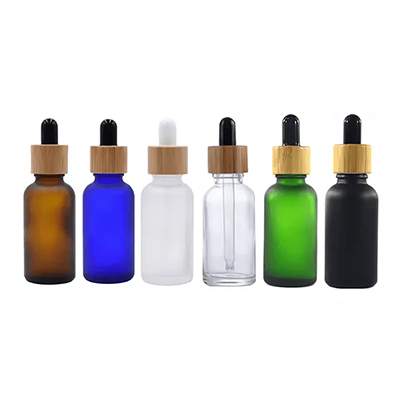
4. Customization Trends 2026: The “No-Label” Look
In the premium tier, the adhesive paper label is dead. It peels in steam-filled bathrooms and absorbs oil drips. For frosted green glass dropper bottles, the texture makes labeling even harder (adhesives don’t stick well to rough surfaces).
The 2026 standard is Direct Decoration.
1. Hot Stamping on Frost
Traditionally, you couldn’t hot stamp (foil) directly onto frosted glass because the foil wouldn’t adhere to the peaks and valleys of the etch.
- The Innovation: New “Leveling Primers” are silk-screened onto the frosted area first. The foil is then stamped onto the primer.
- The Look: A shiny Gold or Copper logo floating on a matte emerald green background. This high-contrast metallic-on-matte look is the definition of “Shelf Pop.”
2. Gradient Spray (Ombré)
Instead of solid green, brands are using clear glass bottles and spraying them with a translucent green gradient.
- Top: Dark Forest Green (at the neck).
- Bottom: Fading to clear.
- Benefit: It looks like a green bottle, but the clear bottom allows the customer to see the texture and purity of the oil. This is highly popular for bi-phase oils (oil + water) where the separation is visually interesting.
5. The Cap & Bulb: Completing the Aesthetic
A dropper bottle is a system. The glass is only 50% of the visual.
The Monochromatic Trend
For 2026, we are seeing “Dip-Look” packaging.
- Bottle: Frosted Green.
- Bulb: Matte Green Silicone (Pantone matched).
- Collar: Matte Green Aluminum (Anodized). This single-color block stands out against the sea of black and white caps. It looks custom, expensive, and intentional.
The “Wood” Effect
For organic brands, the Bamboo Collar is a staple.
- The Upgrade: Standard bamboo collars are raw wood over plastic. They stain. The 2026 upgrade is “Varnished Walnut” or “Dark Ash”. Darker woods contrast beautifully with the bright green glass, creating a “Forest Floor” aesthetic that appeals to the gender-neutral / men’s grooming market.
6. Case Study: “HempLux” Rebranding Success
To illustrate the ROI of this packaging shift, let’s look at “HempLux” (a composite case study based on real industry data).
The Before State: HempLux sold a 1000mg CBD Tincture in a standard Amber 1 oz dropper bottle with a glossy black cap and a paper label.
- Retail Price: $45.
- Problem: Sales were stagnant. Retailers said it “looked like medicine” and got lost among 50 other amber bottles on the CBD shelf.
The Pivot: They rebranded to a Frosted Green Glass Dropper Bottle (Solid Green, not sprayed).
- Design: White silk-screened text (no label). A matte white silicone bulb.
- Positioning: They moved from “Pain Relief” (Medical) to “Calm & Balance” (Lifestyle/Beauty).
The Financials:
- Packaging Cost: Increased by $0.35 per unit (due to the frosting and silk screen).
- Retail Price: Increased to $65.
- Result:
- Sales Volume: Increased 200% in the first quarter.
- Influencer Unboxing: The frosted green bottle photographed better on Instagram (no glare/reflection like glossy amber).
- Retention: Customers kept the empty bottles to use as vases because they were “too pretty to throw away,” keeping the brand top-of-mind.
7. Sourcing & Supply Chain: What to Ask Your Supplier
When you are ready to order 1 oz dropper bottles or 2 oz dropper bottle stock in frosted green, use this checklist to avoid common pitfalls.
1. “Is the Green Furnace or Sprayed?”
- Always ask. If it’s sprayed, ask for the “Acetone Rub Test” results. If the green spray isn’t cured properly, it will wipe off with nail polish remover (acetone). You don’t want a customer’s manicure ruining your bottle.
2. “What is the Pipette Material?”
- For dropper bottles containing essential oils, use Low Borosilicate or Neutral Glass for the pipette. Soft soda-lime glass pipettes can sometimes leach alkali into the product, altering the pH of sensitive serums over 12 months.
3. “Do you offer ‘Wiper’ Inserts?”
- A wiper is a small LDPE plug that sits in the neck. As the user pulls the pipette out, it wipes the excess oil off the glass stem.
- Benefit: This prevents the oily “ring of death” on the bottle shoulder and keeps the threads clean, preventing leakage. It is a small add-on ($0.02) that drastically improves the “Premium Feel.”
8. Sustainability: The Recyclability of Green
Finally, the 2026 consumer is eco-conscious.
- Frosted Glass: Is fully recyclable. The acid etch is a surface modification, not a coating. It melts down just like clear glass.
- Green Glass: Is recyclable in mixed-color streams.
- The Narrative: Market your frosted green glass dropper bottle as “Plastic-Free Packaging” (if you use a metal/wood cap and minimize the bulb plastic).
Conclusion
The frosted green glass dropper bottle is more than a trend; it is a strategic response to a market demanding transparency, nature, and luxury.
Whether you are filling 1 oz dropper bottles with liquid gold facial serums or 2 oz dropper bottles with botanical body elixirs, the vessel itself tells the story of the origin of the ingredients. By choosing green, you signal potency. By choosing frosted, you signal luxury. And in 2026, that combination is the key to unlocking the “Masstige” price point.
Don’t just package your product. Elevate it.