 Glasflaschenzubehör












Der Vertriebsleiter wird sich innerhalb von 24 Stunden mit Ihnen in Verbindung setzen.
Molekulare Inertheit und strukturelle Integrität: Der technische Standard für professionelle Nagellackverpackungen
In the sophisticated ecosystem of cosmetic science, the performance of a formula is inextricably linked to the physical properties of its primary container. For high-performance coatings, Nagellackflaschen are no longer viewed as passive vessels but as critical engineering components that must manage gas permeability, photochemical reactivity, and solvent volatility. As the industry moves toward complex, photo-curable oligomers and high-pigment suspensions, the procurement of Großhandel Nagellackflaschen must be guided by rigorous material science and mechanical standards to prevent catastrophic product failure.
The Chemistry of Substrate Selection: Beyond Standard Soda-Lime
While the majority of the market utilizes Type III soda-lime glass, the professional sector increasingly demands modified glass compositions to ensure long-term stability. The primary technical challenge lies in the “alkali release” of standard glass. Over time, the leaching of sodium ions can shift the pH of a sensitive nail lacquer, leading to pigment flocculation or “color drifting.”
To mitigate this, advanced manufacturing for Gel-Flasche Nagellack involves the integration of high-purity silica and specific stabilizers like Aluminum Oxide ($Al_2O_3$). This creates a tighter molecular matrix, significantly reducing the Hydrolytic Resistance class. Furthermore, the internal surface energy of the glass is calibrated through de-alkalization treatments. This process ensures that high-viscosity gels exhibit optimal “wall-slip” behavior, allowing for a consistent draw-down of the product without leaving excessive residue on the interior surfaces.
Hermetic Engineering: Mitigating the Micro-Leaking of Volatile Solvents
The most prevalent cause of consumer dissatisfaction in the nail industry is the thickening of the formula, often misidentified as “drying out.” In reality, this is a failure of the neck-to-cap interface. When sourcing Mini-Nagellackflaschen, where the ratio of headspace to liquid volume is high, even a microscopic leak path can lead to the evaporation of Ethyl Acetate and Butyl Acetate within months.
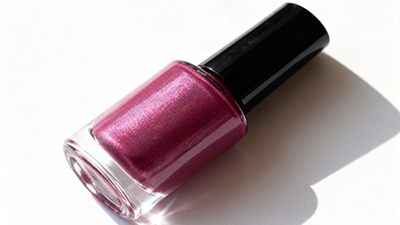
The engineering of the “E-neck” finish requires a tolerance of less than $\pm 0.15mm$ on the land area (the top rim of the bottle). If the land area is not perfectly planar, the gasket inside the cap cannot achieve uniform compression. High-speed manufacturing lines now utilize “Automatic Cold-End Inspection” (ACEI) to reject any bottle with a dip or a “saddle” on the finish. This precision ensures that when a technician applies the specified torque, the hermetic seal is absolute, preserving the kinetic viscosity of the lacquer from the factory to the salon.
Technical Specification Matrix: Glass vs. Formulation Compatibility
| Performance Metric | Traditional Lacquer | UV/LED Gel Systems | High-Solvent Professional Line |
| Glasart | Soda-Lime (Type III) | Opaque-Coated Soda-Lime | High-Density Glass |
| Seal Requirement | PE Gasket (Standard) | PTFE-Lined / Induction Seal | Solvent-Inert TPE |
| UV Transmittance | Not Critical | 0.0% (200-450nm) | Minimal (UV Stabilized) |
| Wanddicke | 1.5mm – 2.2mm | 2,0 mm - 3,0 mm | 2.5mm+ (Thermal Mass) |
| Hals-Toleranz | $\pm 0.20mm$ | $\pm 0.10mm$ | $\pm 0.12mm$ |
The Physics of Light Exclusion in UV-Curable Systems
Der Übergang zu Gel-Flasche Nagellack has introduced a complex variable: the photo-initiator. These chemicals are designed to trigger rapid polymerization when exposed to 365–405nm light. However, the secondary sensitivity of these formulas often extends into the visible blue light spectrum (up to 450nm).
Engineering a truly light-inert bottle requires more than a simple coat of paint. Professional-grade Großhandel Nagellackflaschen undergo a multi-stage vacuum metallization or an electrostatic powder coating process. The challenge is the “neck-shoulder transition”—a common failure point where the coating thickness often thins out. A precision-engineered bottle ensures a “wrap-around” coating density that covers the entirety of the neck threads, preventing “bridge curing,” where the gel hardens at the bottle mouth and prevents the cap from opening or sealing correctly.
Case Study: Resolving Premature Polymerization and Liner Swelling in a Global Gel Line
Markenhintergrund und -anforderung
A premium Japanese nail brand sought a solution for their 10ml “Pro-Series” gel line. The product was experiencing “viscosity spikes” during international air freight, and customers reported that the internal plastic liners were detaching from the caps upon arrival in warmer climates.
Technische Herausforderungen
Analysis revealed two distinct failure modes:
- Thermal Expansion/Contraction: During high-altitude transit, the pressure differential caused the volatile components to force their way into the standard PE liner, causing it to swell (sorption) and lose its adhesive bond with the cap.
- Actinic Leakage: The “window” design on the bottle, intended for color identification, was allowing enough ambient UV-A to enter the bottle over a 90-day shelf period to initiate a slow-growth polymerization, increasing the gel’s viscosity by 40%.
Technical Parameter Settings and Solution
- Liner Re-Engineering: The standard PE liner was replaced with a Fluorinated Ethylene Propylene (FEP) faced liner. FEP is virtually inert to the aggressive monomers found in high-end gels, preventing the swelling and detachment issues.
- Precision UV Filtering: The color-window was redesigned using a specialized “Interference Filter” coating. This coating allows the visible color to pass through while reflecting 99.9% of the radiation below 450nm.
- Annealing Schedule: The glass annealing time was increased by 15% to ensure that the stress-point of the bottle (the neck-shoulder junction) could withstand the mechanical torque required for a high-compression FEP seal without fracturing.
- Torque Standardization: The capping line was calibrated to a “Dynamic Torque” of 1.3 Nm, ensuring the FEP liner was sufficiently seated against the glass land area.
Production and Quality Assurance
A “Stress-Crack Resistance” test was implemented, where bottles were submerged in the gel formula at $50^\circ C$ for 21 days. The new FEP-Faced seal showed zero degradation, and the Interference Filter window successfully blocked all reactive wavelengths in a simulated sunlight chamber.
Endgültige Marktleistung
The brand successfully launched the “Pro-Series” without a single reported case of liner detachment. The shelf-life was extended from 12 months to 24 months, and the viscosity remained within a $\pm 5\%$ margin across all global distribution centers.
Strategic Procurement: The Economics of High-Density Glass
In the volume-driven market of Großhandel Nagellackflaschen, the “Total Cost of Quality” (TCQ) often outweighs the initial unit price. Low-quality glass with uneven wall distribution—where one side of the bottle is thinner than the other—leads to high breakage rates in automatic filling stars.
Engineering high-performance Nagellackflaschen involves “Narrow Neck Press and Blow” (NNPB) technology, which allows for a more uniform glass distribution. This consistency is particularly vital for Mini-Nagellackflaschen, where the smaller thermal mass makes the glass more susceptible to thermal shock during the sterilization or labeling processes. For a brand, investing in NNPB-molded glass means fewer line stoppages, lower scrap rates, and a premium tactile feel that reinforces the consumer’s perception of quality.
Advanced Keyword Integration: The Future of Packaging SEO
The current industry discourse is shifting toward high-barrier cosmetic glass, low-alkali glass containers, und hermetic manicure packaging. These terms reflect a deeper understanding of the intersection between chemical engineering and traditional glass blowing, providing the foundation for the next generation of professional-grade beauty products.
FAQ: Engineering Insights for Nail Packaging
Q1: Warum ist die “Schulter” einer Nagellackflasche often the first place to break?
The shoulder is a “stress concentrator” during the blowing process. If the glass is not cooled (annealed) slowly and uniformly, internal tension remains trapped. High-quality nail polish bottles use a computerized annealing lehr to ensure these stresses are neutralized, making the bottle resistant to drops and mechanical capping pressure.
Q2: Can I use a standard brush with a high-viscosity gel formula?
Brush engineering is part of the packaging system. For high-viscosity gels, the filament count must be higher and the “stiffness” of the nylon (typically DuPont Tynex) must be adjusted to prevent the brush from “loading” too much product, which can cause drips and uneven application.
Q3: Does the shape of the bottle (Square vs. Round) affect product stability?
Square bottles, while aesthetically pleasing, have “cold corners” during the manufacturing process where glass may be thinner. From a technical standpoint, round nail polish bottles offer the most uniform strength and are easier to clean in a recycling loop. If a square design is used, the mold must be engineered with “radiused corners” to redistribute mechanical stress.
Q4: What is the benefit of a “heavy base” glass bottle?
Beyond the luxury feel, a heavy base (thick glass bottom) provides a low center of gravity. This is a functional safety feature in a salon environment, preventing the bottle from being easily knocked over during the application process, which is especially important for the smaller footprint of mini nail polish bottles.