 GlassBottleSupplies












Sales manager will contact you within 24 hours
Beyond the Vessel: The Advanced Engineering of Photochemical Stability in Glass Syrup Systems
In the high-stakes sectors of cosmeceuticals and specialized pharmacology, a container is never just a container; it is a sophisticated barrier system. For formulations characterized as “syrups”—ranging from lipid-rich facial oils to viscous botanical concentrates—the interaction between the silicate matrix and the active formulation dictates the commercial viability of the product. At glassbottlesupplies.com, we approach the production of bottles for syrup not through the lens of mere storage, but through the science of stability and the physics of fluid discharge.
The Photochemical Frontier: Shielding the Molecular Bond
The most significant threat to a “syrup” formulation is often invisible. Ultraviolet (UV) and High-Energy Visible (HEV) light can catalyze the oxidation of delicate compounds, leading to rancidity in oils or the loss of potency in vitamins. While the industry frequently defaults to standard amber, true engineering excellence requires a more nuanced understanding of light transmission.
Wavelength Filtration and Dopant Chemistry
The protective qualities of glass bottle syrup containers are determined by the metallic oxides added to the glass melt. Amber glass traditionally relies on a combination of iron, sulfur, and carbon to absorb light in the 200nm to 450nm range. However, for “blue-light” protection (HEV), which extends up to 500nm, specialized dopants and thickness specifications are required.
Engineering a bottle with a controlled Fe2O3 (iron oxide) concentration allows us to tune the transmission curve. For high-end brands, we often implement “Double-Shield” technology: combining a pigmented glass substrate with an external vacuum-metallized coating. This doesn’t just block light; it reflects it, ensuring that the internal temperature of the syrup remains stable even when exposed to warehouse lighting for extended periods.
Surface Tension and the Rheology of Discharge
One of the most frequent complaints in the bottles syrup category is the “clogged orifice” or messy discharge. This is a direct consequence of ignoring the rheological properties of the fluid—its flow behavior and viscosity.
The Meniscus Engineering
When a consumer dispenses a high-viscosity syrup, the surface tension of the liquid interacts with the surface energy of the glass. If the glass surface is too “wet-able,” the syrup will cling to the rim, leading to dry-down and crystallization.
To combat this, advanced miniature syrup bottles can undergo a specialized silanization process. By applying a microscopic layer of organofunctional silanes to the neck finish, we can create a hydrophobic (water-repelling) and oleophobic (oil-repelling) boundary. This ensures a “clean break” of the liquid during pouring, maintaining the hygienic integrity of the closure and preventing the unsightly buildup of dried product.
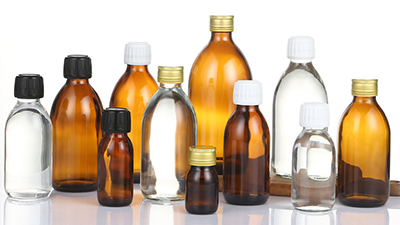
Case Study: The “Zero-Waste” Viscous Serum Project
Brand Background and Requirement
A global luxury brand developed a “Night Repair Syrup” containing high concentrations of encapsulated retinol and rare botanical lipids. The product had a viscosity of approximately 2,500 cP (centipoise)—similar to honey. The brand required a 50ml glass bottle syrup solution that allowed for 98% product evacuation (minimizing “dead volume”) while protecting the air-sensitive retinol.
Technical Challenges
- Product Retention: In standard bottles, nearly 15% of the high-value syrup adhered to the internal walls, leading to consumer dissatisfaction.
- Oxidation: Retinol is highly sensitive to oxygen; standard screw caps allowed too much air exchange during opening.
- Stress Cracking: The formula contained certain synthetic esters that caused micro-stress cracking in lower-grade plastic pumps.
Technical Parameters and Setup
The solution involved a radical redesign of the internal bottle geometry and material selection:
- Internal Geometry: We utilized a “Parabolic Internal Base.” Instead of a flat interior, the bottom of the bottle was molded into a smooth curve, directing all fluid toward the center intake of the dip tube.
- Surface Treatment: The interior was treated with a fluorinated plasma coating to reduce surface friction, allowing the syrup to “slide” down the walls as the volume decreased.
- Airless Glass Integration: We engineered a custom 18/415 neck finish that accommodated a glass-compatible airless pump system, utilizing a PE (Polyethylene) piston that rises with the product, eliminating oxygen headspace entirely.
- Annealing Standards: The bottles were processed through a long-cycle annealing lehr to achieve a Residual Stress Grade of < 40nm/cm, ensuring durability during high-pressure airless pump crimping.
| Feature | Technical Specification | Benefit |
| Interior Coating | Fluorinated Plasma (CF4) | 98.5% Evacuation Rate |
| Glass Type | Grade 3 High-Flint | Maximum Clarity with Zero Leaching |
| Neck Verticality | < 0.3mm deviation | Perfect Seal with Airless Pump |
| UV Block | 100% up to 400nm | Retinol Potency Retained for 18 Months |
Mass Production and Quality Control
The project utilized “Hot-End Coating” (tin tetrachloride) to increase the scratch resistance of the bottles during the manufacturing line. Every unit passed through a Laser Profile Sensor to verify the parabolic internal base’s dimensions within a 0.05mm tolerance.
Market Performance
The product achieved a “Best-in-Class” rating for sustainability because the high evacuation rate meant consumers didn’t throw away 15% of their purchase. The brand saw a 40% increase in repeat purchases compared to their previous packaging.
The Sustainable Supply Chain: Decarbonizing Silicates
In the current global market, glass bottle syrup procurement is inextricably linked to ESG (Environmental, Social, and Governance) goals. The energy-intensive nature of glass melting is being offset by two major technological shifts.
Hydrogen-Fueled Furnaces
The industry is moving toward “Hybrid Furnaces” that use a combination of renewable electricity and hydrogen. This significantly reduces the carbon intensity of producing bottles for syrup, making them more attractive to brands committed to a net-zero future.
Strategic Sourcing of Cullet
By utilizing high-quality, post-consumer recycled (PCR) glass, we reduce the “virgin” sand requirements. For miniature syrup bottles, where precision is paramount, the challenge is maintaining color consistency. Our labs use X-ray fluorescence (XRF) analyzers to check the chemical composition of incoming recycled glass in real-time, ensuring that the final bottle meets both aesthetic and structural standards.
Technical Keyword Expansion
To assist technical buyers, we have integrated three additional critical concepts:
- Hydrolytic resistance Class 3 (The standard for cosmetic-grade soda-lime glass)
- Borosilicate 3.3 expansion (The gold standard for pharmaceutical-grade heat resistance)
- Anti-leaching glass technology (Crucial for high-pH formulations)
Professional FAQ
Q1: How does wall thickness affect the cooling rate of my syrup?
Glass is a poor thermal conductor. Thicker walls (4mm+) act as a thermal battery; they take longer to heat up but also longer to cool down. If your syrup is heat-sensitive, we recommend a thinner-walled design with a “High-Shoulder” to dissipate heat faster after a hot-fill process.
Q2: What is the difference between “frosted” glass and “etched” glass for syrups?
Frosted glass is usually a surface spray coating, which can sometimes peel if exposed to high-alcohol syrups. Acid etching is a chemical process that changes the glass surface itself. Etching is permanent and provides a superior grip for oily syrups, though it is more labor-intensive to produce.
Q3: Why is my pump failing to prime with a miniature syrup bottle?
This is often a “back-pressure” issue. In miniature syrup bottles, the small headspace means the pump must work harder to create a vacuum. Ensuring the dip tube length is cut to a “V-notch” 1mm above the base can prevent suction-lock.
Q4: Is it possible to get a custom logo embossed on a 5ml miniature syrup bottle?
Yes, but it requires high-precision CNC-milled molds. Due to the small surface area, the depth of the embossment must be carefully calculated (usually 0.3mm) to prevent “mold-sticking” while remaining sharp enough to be visible through the syrup’s color.